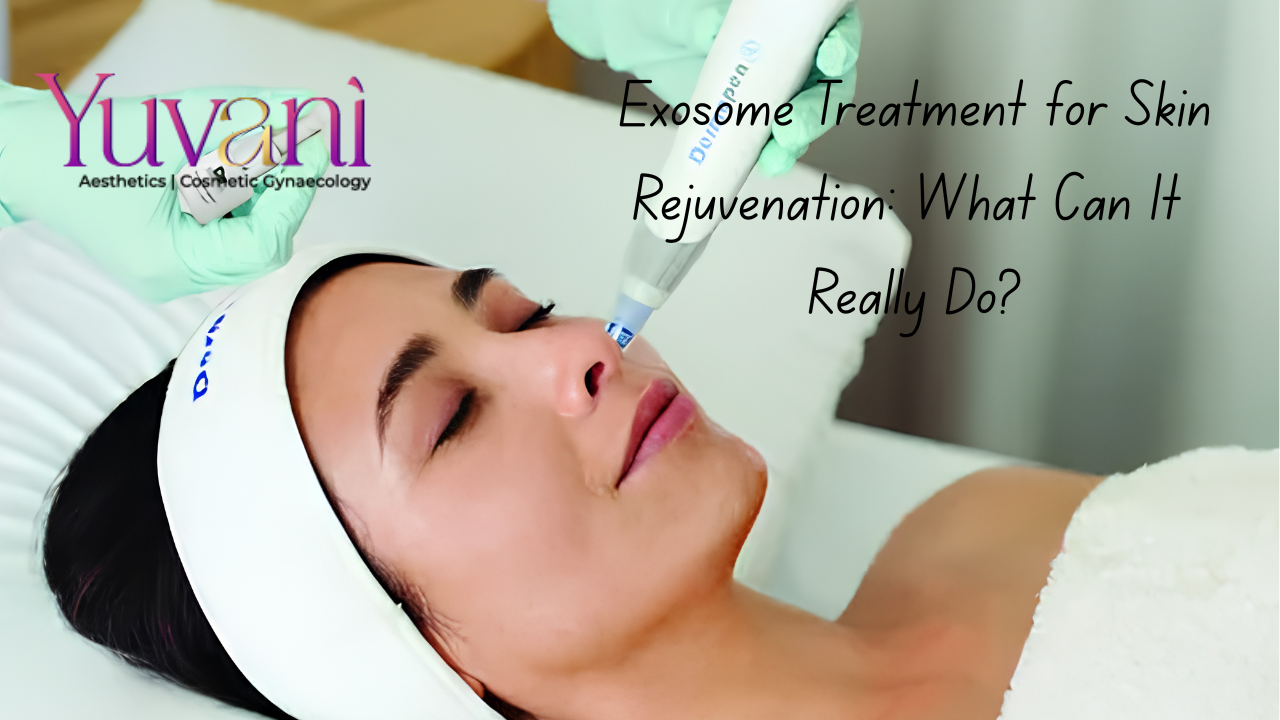
Healthy-looking skin is influenced by several factors, including collagen levels, hydration, sun exposure, genetics, lifestyle, and the natural ageing process. Over time, you may notice fine lines, uneven texture, dullness, or a gradual loss of skin elasticity. While a consistent skincare routine remains essential, professional aesthetic treatments can offer additional options for addressing certain skin concerns.
One treatment attracting attention in aesthetic medicine is exosome therapy. It is often discussed in connection with skin rejuvenation, tissue repair, and cellular communication. However, with so many claims surrounding this treatment, it is important to understand what exosomes actually are, what research suggests, and what remains uncertain.
If you are exploring Exosome Treatment in Navi Mumbai, this guide explains its proposed role in skin rejuvenation, potential benefits, limitations, safety considerations, and how it compares with other aesthetic treatments.
What Is Exosome Treatment for Skin?
Exosomes are tiny extracellular vesicles released by cells. They help cells communicate by carrying biological materials such as proteins, lipids, and certain types of RNA.
Researchers are studying how these vesicles influence processes involved in inflammation, tissue repair, and communication between cells. This has generated interest in their potential applications in dermatology and aesthetic medicine.
In cosmetic settings, products marketed as exosome treatments may be used alongside procedures intended to improve skin appearance. However, these products can differ substantially in their source, composition, manufacturing process, and quality controls.
It is important to understand that exosome treatment is an emerging area of aesthetic medicine, not a universally established skin-rejuvenation solution. Evidence supporting one product or method cannot automatically be applied to every product sold under the exosome label.
How Does Exosome Treatment Work?
The proposed role of exosomes in skin rejuvenation relates to their ability to carry biological signals between cells.
Depending on their source and composition, exosomes may contain molecules that influence how recipient cells respond to their environment. Researchers are investigating whether these signals could be useful in processes associated with skin repair and inflammation.
In aesthetic practice, exosome-based products are often promoted for potential effects on skin quality.
1. Supporting Skin Repair Processes
Certain exosomes are being studied for their potential influence on cellular responses involved in tissue repair.
This research is relevant to dermatology, but laboratory findings and early studies do not establish that every commercially available exosome product improves skin healing or rejuvenation in people.
2. Investigating Collagen-Related Effects
Collagen is a structural protein that helps maintain the firmness and elasticity of the skin. Its production and organisation change with age and ultraviolet exposure.
Some preclinical research has investigated whether exosome-related signalling can influence pathways associated with collagen production and tissue remodelling.
However, the degree of benefit from a particular cosmetic product remains uncertain. It would be inaccurate to promise substantial collagen regeneration or guaranteed wrinkle reduction from exosome treatment.
3. Exploring Effects on Skin Texture
Uneven skin texture may result from acne scarring, sun damage, dehydration, or changes associated with ageing.
Researchers are exploring whether exosome-based approaches could complement certain skin procedures. Nevertheless, the clinical evidence is still developing, and established treatments may be more appropriate for specific texture concerns.
What Can Exosome Treatment Really Do for Your Skin?
The potential benefits depend on the specific product, the method of application, the condition being treated, and the available clinical evidence.
Exosome-based treatments are often marketed for the following concerns, but these should be viewed as proposed or emerging applications rather than guaranteed outcomes.
Improve the Appearance of Fine Lines
Fine lines may develop because of repeated facial expressions, sun exposure, dehydration, and reduced skin elasticity.
Exosome treatment is being investigated for its potential role in skin-quality improvement. However, strong clinical evidence demonstrating reliable wrinkle reduction across commercially available products is limited.
Depending on the type of lines, established options such as sunscreen, topical retinoids, botulinum toxin, or selected resurfacing treatments may be more appropriate.
Support More Even-Looking Skin Texture
People with rough or uneven skin often seek treatments that help the complexion look smoother.
Some exosome-based products are offered alongside microneedling or other aesthetic procedures. The results may depend on the procedure itself, the product used, and the individual's skin condition.
Before choosing this approach, ask what evidence supports the specific product and whether an established treatment could better address your concern.
Address Dull-Looking Skin
Dullness can be associated with dehydration, accumulated dead skin cells, sun exposure, and lifestyle factors.
A suitable moisturiser, gentle exfoliation, sunscreen, or professional cleansing treatment may help improve the appearance of dull skin. Exosome treatment is sometimes marketed for similar concerns, but its additional benefit has not been established for all products.
Explore Skin-Recovery Applications
Some research is examining exosomes in wound healing and tissue repair. These findings are scientifically interesting, but medical wound-healing research should not be confused with proof that a cosmetic exosome product improves recovery after every aesthetic procedure.
The intended use, product quality, and evidence for the specific application matter.
Can Exosome Treatment Help With Acne Scars?
Acne scars are not all the same. Some create depressions in the skin, while others cause raised scars or persistent colour changes.
Treatment depends on the scar type and severity.
Options may include:
- Microneedling for selected types of atrophic acne scars
- Fractional laser resurfacing
- Subcision for certain tethered scars
- Chemical peels for selected superficial concerns
- Other dermatologist-directed procedures
Exosome-based products are being investigated as possible adjuncts to certain procedures, but evidence remains limited and varies by protocol.
They should not be considered a proven standalone treatment for all acne scars. A dermatologist can assess your scar type and recommend a treatment plan based on established evidence.
Exosome Treatment vs Polynucleotide Treatment
Exosomes and polynucleotides are different categories of biological materials, even though both are discussed in the context of skin rejuvenation.
Exosomes are extracellular vesicles involved in cellular communication. Polynucleotides are chains of nucleotides, the building blocks of DNA and RNA.
| Feature | Exosome Treatment | Polynucleotide Treatment |
|---|---|---|
| What it contains | Extracellular vesicles or products marketed as exosome-based | Polynucleotide-based formulations |
| Main area of research | Cellular communication and tissue-related processes | Skin quality and tissue-repair processes |
| Aesthetic use | Emerging and product-dependent | Product-dependent, with varying levels of clinical evidence |
| Potential goals | Skin-quality improvement and recovery support | Skin texture, elasticity, and other skin-quality concerns |
| Evidence | Limited and variable for cosmetic products | Varies by formulation and intended use |
| Key consideration | Source, composition, manufacturing quality, and regulatory status | Product composition, evidence, intended use, and safety |
Neither treatment is automatically better than the other. The right choice depends on the skin concern, the actual product, and the evidence supporting its use.
Exosome Treatment vs Microneedling
Microneedling is an established procedure that uses fine needles to create controlled micro-injuries in the skin. It is used for selected concerns, including certain types of acne scarring and uneven texture.
Exosome products may be marketed for use alongside microneedling, but combining them does not automatically improve results.
| Feature | Exosome-Based Treatment | Microneedling |
|---|---|---|
| Approach | Uses a product containing or marketed as containing exosomes | Creates controlled micro-injuries in the skin |
| Main purpose | Proposed support for cellular signalling and skin quality | Stimulates a wound-healing response and may improve selected texture concerns |
| Evidence | Depends on the product and application; remains limited for many cosmetic claims | More established for selected indications |
| Risks | Depend on the product, source, and application method | Include redness, irritation, infection, and pigment changes |
| Suitability | Requires product-specific assessment | Depends on skin condition and procedure type |
If a clinic proposes combining exosomes with microneedling, ask whether the product is appropriate for that method of application and what evidence supports the combination. A product intended for one route of administration should not automatically be used by another route.
Who May Consider Exosome Treatment?
Exosome-based cosmetic treatments are sometimes discussed with people interested in addressing early signs of ageing, uneven texture, or other skin-quality concerns.
However, there is no universal list of suitable candidates because products and protocols differ.
A consultation should consider:
- Your main skin concern
- Skin type and sensitivity
- Medical history and allergies
- Current medications
- Active acne, eczema, or other skin conditions
- Previous aesthetic treatments
- The product's source and intended use
- Available clinical evidence
People with active skin infections or significant inflammation may need treatment for those conditions before considering an elective aesthetic procedure.
If you are pregnant or breastfeeding, seek medical advice before considering an elective treatment involving a biologically derived product or a procedure that affects the skin barrier.
Is Exosome Treatment Safe?
Safety is one of the most important considerations when evaluating exosome-based treatments.
Products sold under the same name may have different sources, ingredients, manufacturing standards, and intended uses. Some may be marketed for topical application, while others may be proposed for use alongside procedures that affect the skin barrier.
These differences matter because the safety of a product cannot be established by the word "exosome" alone.
Potential concerns include:
- Local irritation or inflammatory reactions
- Contamination if manufacturing or handling standards are inadequate
- Uncertain effects from poorly characterised products
- Infection risks associated with invasive application methods
- Lack of sufficient human clinical data for the intended use
The risks also depend on whether a product is applied topically, used after microneedling, or administered by another method.
Before treatment, ask the provider to explain the product's origin, ingredients, manufacturing and quality controls, intended route of use, and regulatory status for that application. Do not assume that a product is approved for a cosmetic indication simply because it is available at a clinic.
What Happens During an Exosome Skin Treatment?
The procedure varies according to the product and the clinic's protocol. Some treatments involve topical application, while others are offered alongside procedures such as microneedling.
A typical consultation and treatment process may include the following steps.
Step 1: Skin Assessment
The practitioner reviews your concerns and examines your skin to determine whether the proposed treatment is appropriate.
Step 2: Discussion of the Product
You should be informed about the product's source, composition, intended use, evidence, and potential risks.
Step 3: Skin Preparation
The skin is prepared according to the procedure being performed. If microneedling or another procedure is involved, its separate risks and aftercare requirements should be explained.
Step 4: Product Application
The product is used according to its instructions and the practitioner's protocol. The application method should be appropriate for that specific product.
Step 5: Aftercare
You receive guidance on cleansing, moisturising, sunscreen use, and avoiding irritating skincare products or activities while your skin recovers.
Do not proceed if the provider cannot clearly explain what product is being used or how it is intended to be applied.
How Many Sessions Are Needed?
There is no standard session schedule for all exosome-based skin treatments.
Recommendations depend on the specific product, treatment method, skin concern, and evidence supporting the protocol.
Be cautious of packages promising a fixed number of sessions will produce a guaranteed result. Ask the practitioner why the proposed schedule is appropriate and how progress will be assessed.
It is also reasonable to ask whether the expected benefits justify the total cost compared with established treatments.
When Can You Expect Results?
Results vary, and there is not enough consistent clinical evidence to provide a reliable timeline for every exosome product.
If a treatment is used alongside microneedling or another procedure, some early changes may reflect the procedure itself rather than the exosome product.
This is an important distinction when evaluating treatment claims.
Your practitioner should explain what changes are realistically expected, when to assess progress, and what evidence supports those expectations. Photographs taken under consistent lighting may help document changes over time.
How Can You Maintain Healthy-Looking Skin?
Whether or not you choose a professional treatment, daily skincare plays an important role in maintaining skin quality.
Use Sunscreen Every Day
Ultraviolet exposure contributes to premature skin ageing, uneven pigmentation, and collagen damage. A broad-spectrum sunscreen with SPF 30 or higher is a useful part of a daily skincare routine.
Keep Your Skin Hydrated
Choose a moisturiser suited to your skin type. Ingredients such as glycerin, ceramides, and hyaluronic acid can help maintain hydration.
Use Active Ingredients Carefully
Retinoids and other evidence-based skincare ingredients may help address selected signs of ageing, but they can cause irritation if used incorrectly. Introduce them gradually and seek professional advice if you have sensitive skin.
Avoid Over-Treating Your Skin
Combining several intensive procedures in a short period may increase irritation and recovery time. A treatment plan should account for your skin's condition and recovery needs.
Address Underlying Skin Concerns
Persistent acne, pigmentation, redness, or inflammatory conditions may require diagnosis and targeted treatment rather than a general rejuvenation procedure.
Considering Exosome Treatment in Navi Mumbai?
If you are exploring Exosome Treatment in Navi Mumbai, start by identifying the concern you want to address. Fine lines, acne scars, pigmentation, and uneven texture can have different causes and may respond better to different treatments.
A consultation with a qualified medical professional can help you understand the available options, the evidence behind the proposed treatment, and its potential risks.
At Yuvani Aesthetic Clinic, patients can discuss their skin goals and explore appropriate aesthetic options based on their individual concerns. Before proceeding with any exosome-based treatment, ask for clear information about the product, its intended use, supporting clinical evidence, and alternatives.
The best treatment plan is one that prioritises safety, realistic expectations, and the long-term health of your skin.
Frequently Asked Questions
Does exosome treatment really rejuvenate the skin?
Exosomes are being studied for their role in cellular communication and tissue-related processes. However, evidence supporting many cosmetic exosome products remains limited, and skin-rejuvenation results are not guaranteed.
Can exosome treatment reduce wrinkles?
Some products are marketed for fine lines and skin quality, but reliable evidence for consistent wrinkle reduction is limited. Established treatments may be more suitable depending on the type of wrinkles.
Can exosomes help with acne scars?
Exosome-based products are being investigated as possible adjuncts to certain procedures, but they are not a proven standalone solution for all acne scars. Treatment should be selected according to the type of scarring.
Is exosome treatment better than polynucleotides?
Neither is universally better. They are different types of products with different compositions and evidence bases. The choice should depend on the specific product, intended use, skin concern, and safety information.
Is exosome treatment suitable for sensitive skin?
Not necessarily. Suitability depends on the product, ingredients, application method, and the cause of skin sensitivity. A professional assessment is important before treatment.
How long do exosome treatment results last?
There is no reliable duration that applies to all products. Results depend on the formulation, procedure, individual response, and the quality of available evidence.
How do I choose an exosome treatment in Navi Mumbai?
Ask about the exact product, its source, manufacturing standards, intended use, evidence for the proposed application, potential risks, and alternatives. A qualified professional should explain these details before recommending treatment.
Conclusion
Exosome treatment is an emerging area of aesthetic medicine that has generated interest because of the role extracellular vesicles play in cellular communication. Research is ongoing, but many cosmetic claims remain insufficiently established, and products can vary considerably.
For skin concerns such as fine lines, uneven texture, and acne scars, established treatments may offer more predictable options depending on the diagnosis. Exosome-based products should be evaluated carefully rather than chosen solely because they are marketed as advanced or regenerative.
If you are considering Exosome Treatment in Navi Mumbai, a professional consultation can help you compare the available options, understand the evidence and limitations, and choose a plan that supports your skin goals safely.

 Call Us
 WhatsApp