Hair thinning does not always begin with noticeable bald patches. For many people, it starts gradually with increased hair shedding, a wider hair parting, reduced volume, or a receding hairline. Over time, these changes can become more visible and affect confidence.
With advances in aesthetic and regenerative medicine, treatments such as PRP, hair fillers, and exosome-based therapies have gained attention as non-surgical approaches to hair restoration. Among these, exosome hair treatment is being explored for its potential role in supporting cellular communication and scalp health.
However, not everyone experiencing hair loss is an ideal candidate. The suitability of exosome therapy depends on the underlying cause of hair thinning, the condition of the hair follicles, overall scalp health, and the evidence supporting the specific product being used.
If you are considering Exosome Hair Treatment in Navi Mumbai, understanding who may benefit, who should avoid it, and what to expect can help you make a more informed decision.
What Is Exosome Hair Treatment?
Exosomes are tiny extracellular vesicles released by cells. They carry biological materials such as proteins, lipids, and RNA that help cells communicate with one another.
In hair restoration research, exosomes are being investigated for their possible influence on processes involved in hair follicle activity, inflammation, and tissue repair.
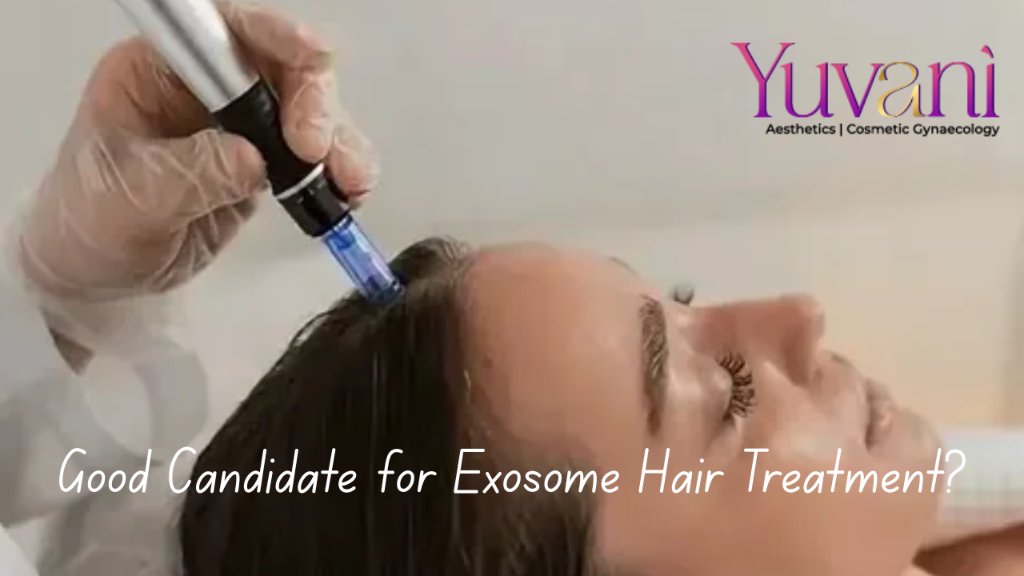
Exosome-based hair treatments are generally promoted as non-surgical procedures that involve applying or administering an exosome-containing preparation to selected scalp areas. The exact method depends on the product and treatment protocol.
It is important to understand that exosome products are not all the same. Their source, manufacturing process, composition, quality controls, and regulatory status can differ. Clinical evidence for their effectiveness and long-term safety in hair loss remains limited, and they should not be presented as an established or guaranteed hair regrowth treatment.
How May Exosomes Support Hair Health?
Hair growth takes place through a repeating cycle involving three main phases:
- Anagen: The active growth phase, during which hair follicles produce new hair.
- Catagen: A short transitional phase in which hair growth slows.
- Telogen: The resting phase, after which the hair is eventually shed.
Certain laboratory and early-stage studies have explored whether exosomes may influence biological signalling associated with hair follicle activity.
Potential areas of research include:
- Cellular communication: Exosomes carry signalling molecules that may influence how surrounding cells respond to their environment.
- Follicular activity: Researchers are investigating whether specific exosome preparations can affect pathways involved in hair follicle function.
- Scalp environment: Some studies are examining their potential role in inflammation and tissue repair.
- Hair growth pathways: Certain experimental findings suggest that exosomes may influence signalling pathways associated with the hair growth cycle.
These findings are promising areas of research, but laboratory results do not automatically translate into reliable clinical hair regrowth. More high-quality human studies are needed to establish which products, if any, are effective and safe for routine hair loss treatment.
Who Is a Good Candidate for Exosome Hair Treatment?
The suitability of exosome hair treatment depends on the individual's diagnosis and the specific product being considered. People with early or moderate hair thinning may be evaluated, but this does not mean they will necessarily benefit from the procedure.
Here are some situations in which a specialist may assess whether an exosome-based treatment is appropriate.
1. People Experiencing Early Hair Thinning
Early hair thinning may appear as reduced hair volume, a wider central parting, or a gradual decrease in hair density around the crown.
At this stage, hair follicles may still be present, even though their activity or size has changed.
A specialist may evaluate the scalp and discuss available treatment options. Exosome-based therapies are sometimes considered in this category, but their clinical effectiveness has not yet been firmly established.
2. Individuals With Pattern Hair Loss
Androgenetic alopecia, commonly known as male or female pattern hair loss, is one of the most common causes of progressive thinning.
It is influenced by genetic and hormonal factors and can affect both men and women.
People with pattern hair loss may seek non-surgical treatments to manage thinning. However, established options such as minoxidil and, for selected patients, prescription medications generally have stronger clinical evidence than exosome therapy.
Exosome treatment should not replace proven medical management without a specialist's advice.
3. People With Reduced Hair Density
Some individuals may notice that their hair looks less dense even without significant shedding. Their ponytail may feel thinner, or the scalp may become more visible under bright lighting.
A scalp assessment can help determine whether this is related to miniaturisation, temporary shedding, nutritional deficiencies, or another cause.
If the follicles remain present, a specialist can discuss suitable treatment options, including established therapies and whether an emerging treatment is appropriate.
4. Individuals Looking for Non-Surgical Hair Restoration Options
Not everyone experiencing hair loss wants to undergo a surgical procedure.
Some people prefer to explore non-surgical approaches before considering hair transplantation.
Exosome-based treatments are marketed in this category, although their effectiveness remains under investigation.
A consultation should include a realistic discussion of the evidence, potential risks, product quality, and alternative treatments.
5. People With a Suitable Scalp Condition
Healthy scalp conditions are important for maintaining normal hair growth.
Individuals with active infections, significant inflammation, or untreated scalp disorders may need treatment for these conditions before considering injectable or topical procedures.
A specialist should examine the scalp to identify problems such as dermatitis, psoriasis, fungal infection, or other inflammatory conditions.
Who May Not Be Suitable for Exosome Hair Treatment?
Exosome hair treatment is not appropriate for every person with hair loss. In some cases, treating the underlying condition is more important than proceeding with an aesthetic procedure.
A specialist may advise against or postpone treatment in the following situations.
1. Advanced Hair Loss With Permanent Follicle Loss
If hair follicles have been permanently destroyed or an area has become completely bald, exosome treatment is unlikely to restore meaningful hair growth.
People with advanced hair loss may need an assessment for other options, including hair transplantation, depending on donor hair availability and overall suitability.
2. Active Scalp Infection
An active bacterial, fungal, or other scalp infection should be diagnosed and treated before considering an injectable scalp procedure.
Administering treatment without addressing an infection may increase the risk of complications.
3. Unexplained or Sudden Hair Shedding
Sudden hair loss can be associated with several medical conditions, including:
- Telogen effluvium after illness, stress, or surgery.
- Iron deficiency or other nutritional deficiencies.
- Thyroid disorders.
- Hormonal changes.
- Medication-related hair shedding.
- Autoimmune conditions such as alopecia areata.
In these situations, identifying the cause is essential. Exosome treatment should not be used as a substitute for appropriate medical investigation.
4. Scarring Alopecia
Scarring alopecia involves damage to hair follicles that can result in permanent hair loss.
It may be associated with inflammation and other scalp symptoms, including redness, scaling, itching, or discomfort.
Early diagnosis and treatment by a dermatologist are important. Exosome-based cosmetic procedures are not an established treatment for scarring alopecia.
5. People With Certain Medical Conditions
Individuals with specific medical conditions, immune-related concerns, allergies, or other health issues may require additional evaluation before undergoing any injectable procedure.
Pregnancy and breastfeeding should also be discussed with the treating specialist because safety information for many exosome-based products is insufficient.
Exosome Hair Treatment for Men and Women
Exosome hair treatment is marketed for both men and women experiencing hair thinning. However, the pattern and cause of hair loss can differ.
For Men
Male pattern hair loss commonly affects the temples, frontal hairline, and crown.
Men may initially notice a receding hairline or thinning around the top of the scalp. Over time, these areas may become more visible.
A hair specialist should assess the stage of hair loss, follicle condition, and progression before discussing treatment options.
For Women
Female pattern hair loss often appears as gradual thinning across the top of the scalp and widening of the central parting.
Women may also experience hair shedding due to hormonal changes, pregnancy, childbirth, menopause, nutritional deficiencies, or thyroid conditions.
Identifying the cause is particularly important because the most appropriate treatment may differ depending on the underlying condition.
What Happens During an Exosome Hair Treatment Session?
The procedure can vary depending on the product, formulation, and method of administration. A typical treatment pathway may involve the following stages.
Step 1: Scalp and Hair Assessment
The specialist examines the scalp, evaluates hair density, and discusses the patient's medical history.
Hair loss patterns, previous treatments, medications, and any associated scalp symptoms are considered.
Step 2: Product and Treatment Discussion
Before proceeding, the patient should receive information about the specific exosome product, including its source, ingredients, manufacturing standards, intended use, safety information, and regulatory status.
The specialist should also explain the limitations of the available clinical evidence.
Step 3: Scalp Preparation
The scalp is cleaned, and the treatment area is prepared according to the product's instructions.
Depending on the procedure, a numbing agent may be considered to improve comfort.
Step 4: Product Application or Administration
The exosome preparation is applied or administered using the method specified for that product. Some protocols involve scalp injections, while others use topical application alongside a procedure intended to support product delivery.
The technique should be performed by an appropriately qualified professional using suitable infection-control practices.
Step 5: Aftercare Instructions
The patient receives instructions about scalp hygiene, washing, physical activity, and any temporary precautions.
The exact aftercare requirements depend on the method used.
How Many Sessions Are Required?
There is no universally established session schedule for exosome hair treatment.
The recommended number and timing of sessions may vary according to:
- The specific product and formulation.
- The treatment method.
- The extent of hair thinning.
- The patient's scalp condition.
- The specialist's assessment.
- The manufacturer's instructions and available clinical evidence.
Be cautious of clinics promising a fixed number of sessions or guaranteed hair growth. A treatment plan should be based on the specific product and the patient's condition.
When Can You Expect Results?
Hair growth is a gradual biological process, so changes in hair density cannot be assessed immediately after treatment.
Some clinics advertise visible improvements within a few months, but there is currently insufficient high-quality clinical evidence to establish a reliable timeline for exosome-based hair treatments.
Results, if any, may depend on the underlying cause of hair loss, the product used, and individual response.
Patients should understand that:
- Hair regrowth is not guaranteed.
- Treatment may not work for every type of hair loss.
- Existing follicles must be assessed.
- Maintenance requirements are not well established.
- Long-term outcomes remain uncertain.
Consistent photographs taken under similar lighting conditions can help document changes during follow-up.
Is Exosome Hair Treatment Safe?
Safety depends on the source, composition, processing, quality controls, and administration method of the product.
The term "exosome treatment" can refer to products with different biological sources and manufacturing processes. Therefore, safety information for one product cannot automatically be applied to another.
Potential concerns may include:
- Redness, swelling, or tenderness at the treatment site.
- Bruising or irritation.
- Infection associated with injections or inadequate sterile technique.
- Inflammatory or immune reactions.
- Uncertain long-term effects due to limited clinical research.
- Risks related to poorly characterised or inadequately regulated products.
Before undergoing treatment, ask the specialist about the product's source, testing, regulatory status, and documented safety information.
It is also important to distinguish between research findings and approved clinical uses. A product being discussed in scientific research does not necessarily mean it is approved or established for hair restoration.
Exosome Hair Treatment vs PRP: Which Is Better?
PRP and exosome-based treatments are both discussed in the context of non-surgical hair restoration, but they are different procedures.
| Feature | Exosome Hair Treatment | PRP Hair Treatment |
|---|---|---|
| Main component | Exosome-containing preparation | Platelet-rich plasma |
| Source | Depends on the product and biological source | Prepared from the patient's own blood |
| Preparation | Product-specific manufacturing and preparation | Blood collection and centrifugation |
| Proposed mechanism | Cellular signalling and biological communication | Platelet-derived growth factors |
| Research status | Emerging; clinical evidence remains limited | More clinical research is available for selected types of hair loss |
| Suitability | Depends on product quality and patient assessment | May be considered for selected cases of pattern hair loss |
| Results | Not reliably established | Variable; some patients may experience improved hair density |
PRP currently has a broader clinical research base for certain forms of hair loss. Exosome therapy remains an emerging area, and more well-designed human studies are required.
The better option depends on the diagnosis, treatment goals, safety considerations, and evidence supporting the specific procedure.
Other Ways to Manage Hair Loss
Exosome treatment should not be considered the only approach to hair restoration. Depending on the diagnosis, a specialist may recommend one or more established treatments.
1. Minoxidil
Minoxidil is a commonly used treatment for certain types of pattern hair loss. It is available in topical formulations, and its suitability depends on the patient's condition and medical history.
2. Prescription Medication
Some patients may benefit from prescription treatments, such as finasteride for selected men with androgenetic alopecia. Other medication options may be considered depending on the patient's sex, age, and diagnosis.
These medicines require medical guidance because they can have side effects and may not be suitable for everyone.
3. PRP Therapy
PRP uses platelet-rich plasma prepared from the patient's own blood. It may be considered as an additional treatment for selected individuals with pattern hair loss.
4. Nutritional Assessment
Iron deficiency, inadequate protein intake, and certain vitamin deficiencies can contribute to hair shedding.
Blood tests may be recommended when a nutritional or medical cause is suspected. Supplements should be taken based on confirmed needs rather than assumptions.
5. Hair Transplantation
For people with established hair loss and suitable donor hair, transplantation may offer a surgical option.
A specialist can assess the donor area, degree of hair loss, and long-term expectations before recommending the procedure.
What Should You Ask Before Choosing Exosome Hair Treatment in Navi Mumbai?
Since exosome-based hair restoration is still an evolving field, asking the right questions before treatment is particularly important.
Consider discussing the following with your specialist:
- What is causing my hair loss?
- Is the specific exosome product suitable for my condition?
- What is the biological source of the product?
- Is there clinical evidence supporting its use for hair restoration?
- What quality testing and safety documentation are available?
- What are the possible side effects and long-term uncertainties?
- Are there better-established alternatives for my type of hair loss?
- How will treatment progress be monitored?
A responsible treatment recommendation should include realistic expectations rather than promises of guaranteed hair regrowth.
Frequently Asked Questions
1. Who is the ideal candidate for exosome hair treatment?
People with early or moderate hair thinning may be evaluated for exosome-based treatment. However, suitability depends on the cause of hair loss, scalp condition, product quality, and the available clinical evidence.
2. Can exosome hair treatment help with male pattern baldness?
Exosomes are being researched for their potential role in hair follicle signalling. However, their effectiveness for male pattern baldness has not been firmly established. Established medical treatments should also be discussed with a specialist.
3. Is exosome hair treatment suitable for women?
Women experiencing hair thinning may be assessed for treatment. However, hormonal changes, nutritional deficiencies, thyroid disorders, and other causes should be investigated before choosing a hair restoration procedure.
4. Can exosome treatment regrow hair on a completely bald scalp?
There is no reliable evidence that exosome treatment can restore hair in areas where follicles have been permanently lost. People with advanced hair loss may need to explore other options.
5. How long does exosome hair treatment take to show results?
There is no established timeline for reliable results. Outcomes and timelines depend on the product and individual condition, and visible hair regrowth is not guaranteed.
6. Is exosome hair treatment better than PRP?
PRP has a broader clinical research base for certain types of hair loss. Exosome treatment is still emerging, and more high-quality human studies are needed to establish its effectiveness and safety.
7. Does exosome hair treatment have side effects?
Possible side effects include temporary redness, swelling, tenderness, bruising, irritation, and infection. Other risks may depend on the product's composition and source.
8. Can exosome treatment be combined with other hair loss treatments?
A specialist may consider combining treatments in selected cases. However, the safety and effectiveness of combinations depend on the products and procedures involved.
9. Is exosome hair treatment a permanent solution for hair loss?
No. It should not be considered a permanent cure. The underlying cause of hair loss may continue to progress, and long-term outcomes of exosome-based treatments remain uncertain.
10. Where can I explore Exosome Hair Treatment in Navi Mumbai?
You can consult Yuvani Aesthetic Clinic for an assessment of hair thinning and discuss available hair restoration options, including whether an exosome-based treatment is appropriate for your concerns.
Final Thoughts
Exosome hair treatment is an emerging area of hair restoration research that has attracted interest because of its potential role in cellular communication and follicle-related biological processes. However, its effectiveness, ideal candidates, long-term safety, and treatment protocols are not yet firmly established.
People experiencing early hair thinning may want to explore different hair restoration options, but identifying the cause of hair loss should always come first.
If you are considering Exosome Hair Treatment in Navi Mumbai, begin with a professional scalp assessment. A qualified specialist can help you understand your condition, review the evidence for available treatments, and develop a realistic approach to managing hair loss.

 Call Us
 WhatsApp