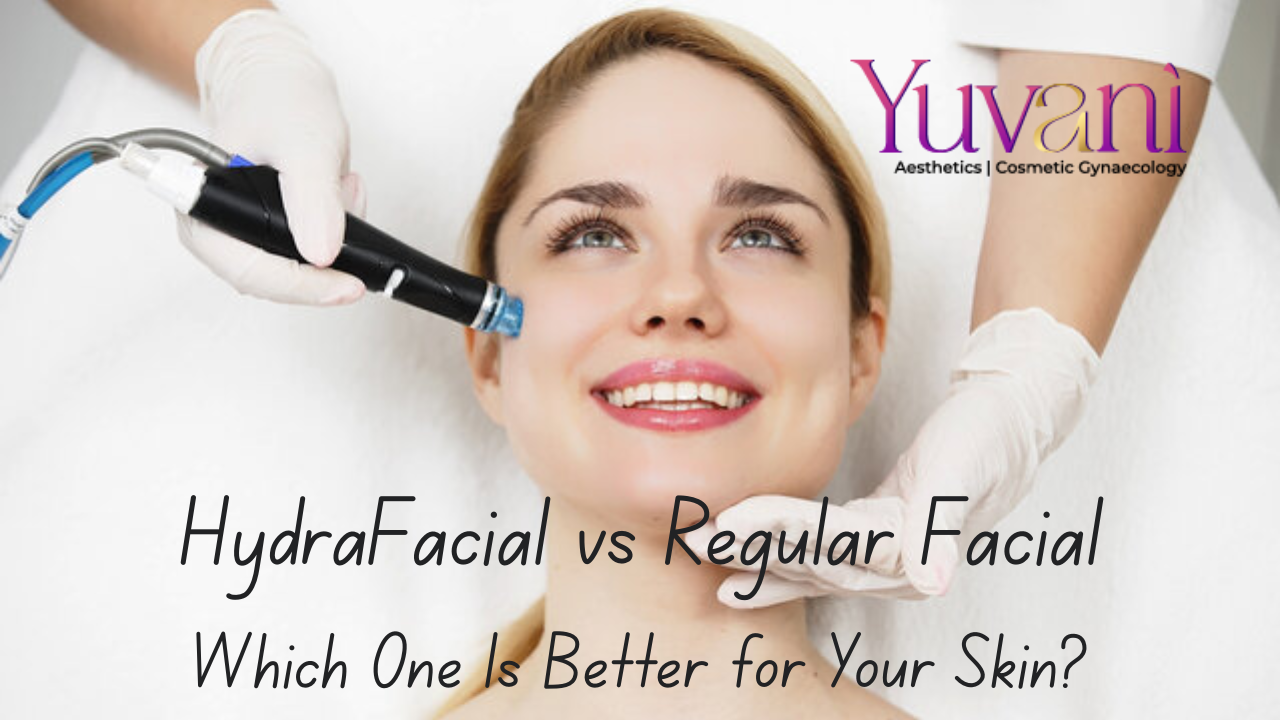
Facials are a popular part of many skincare routines, but not every facial works in the same way. A traditional facial may focus on cleansing, massage, exfoliation, and a face mask, while a HydraFacial uses specialised equipment to combine cleansing, exfoliation, extraction, and hydration in a structured treatment.
So, when comparing a HydraFacial vs regular facial, which one should you choose?
The answer depends on your skin type, concerns, treatment goals, and how much professional skin correction you are looking for. A regular facial may be suitable when you want basic cleansing and relaxation, while a HydraFacial may be considered when concerns such as clogged pores, dullness, dehydration, or uneven texture are more important.
If you are considering HydraFacial in Kharghar, understanding the difference between these treatments can help you make a more informed decision.
What Is a Regular Facial?
A regular facial generally involves a series of manual skincare steps performed using products selected according to your skin type.
Depending on the clinic and facial selected, the treatment may include:
- Cleansing
- Exfoliation
- Steam
- Manual extraction
- Facial massage
- Face mask
- Moisturisation
- Application of skincare products
Traditional facials can vary significantly. A basic facial at one clinic may be very different from a premium or medical facial at another.
The primary focus is usually cleansing, refreshing, hydrating, and temporarily improving the appearance of the skin.
What Is a HydraFacial?
A HydraFacial is a non-invasive treatment that uses specialised technology to combine several skincare steps in one session.
The treatment generally involves:
- Cleansing
- Exfoliation
- Extraction
- Hydration
- Application of selected serums
The procedure is designed to remove surface impurities and dead skin cells while helping clear pore congestion and replenish hydration.
The exact treatment protocol can be customised according to the individual's skin and concerns.
HydraFacial vs Regular Facial: Key Differences
While both treatments can improve the appearance of the skin, the experience and approach are different.
| Feature | Regular Facial | HydraFacial |
|---|---|---|
| Cleansing | Yes | Yes |
| Exfoliation | Usually | Yes |
| Extraction | May be included | Included |
| Hydration | Usually | Yes |
| Facial massage | Often | Not usually the primary focus |
| Technology-based treatment | Depends on facial | Yes |
| Treatment customisation | Depends on provider | Can be customised |
| Focus on pore congestion | Variable | Stronger focus |
| Downtime | Usually minimal | Usually minimal |
| Relaxation | High | Moderate |
| Suitable for regular maintenance | Yes | Yes, depending on skin needs |
The right choice depends on what you want from your treatment.
How Does a Regular Facial Work?
A traditional facial typically begins with cleansing to remove makeup, sunscreen, oil, and surface impurities.
Exfoliation may then be performed to remove dead skin cells.
Depending on the facial, steam may be used before extraction. Manual extraction may then be performed to remove blackheads or other superficial congestion.
The treatment may finish with a facial massage, mask, moisturiser, and other skincare products.
One of the advantages of a traditional facial is that it can be relaxing and enjoyable while providing basic skin maintenance.
However, the results depend heavily on the products, techniques, and expertise of the person performing the treatment.
How Does HydraFacial Work?
HydraFacial combines several treatment steps using specialised equipment.
Step 1: Cleansing
The skin is cleansed to remove surface impurities and prepare it for treatment.
Step 2: Exfoliation
A controlled exfoliation helps remove dead skin cells from the surface.
Step 3: Extraction
A specialised suction-based process helps remove oil and debris from congested pores.
Step 4: Hydration
Hydrating solutions are applied to help replenish moisture and support a smoother skin appearance.
Step 5: Targeted Serums
Depending on the treatment protocol, selected serums or skincare ingredients may be used to address specific concerns.
The treatment can therefore combine cleansing and exfoliation with hydration rather than leaving the skin feeling excessively stripped.
Which Is Better for Clogged Pores?
If clogged pores, blackheads, or congestion are your primary concerns, HydraFacial may offer a more targeted approach.
The extraction component is designed to help remove impurities and excess oil from congested pores.
A regular facial can also include extraction, but the method and effectiveness may vary considerably.
However, neither treatment permanently "closes" pores. Pore size is influenced by genetics, skin structure, oil production, and other factors.
Which Is Better for Oily Skin?
Both treatments may be suitable for oily skin when appropriately selected.
A regular facial can cleanse the skin and remove surface oil, while HydraFacial combines cleansing and extraction with hydration.
This can be useful for people who have oily but dehydrated skin.
It is important not to over-cleanse or aggressively strip oily skin. Removing every trace of natural oil is not the goal.
Healthy skin still needs its natural lipids to support the skin barrier.
Which Is Better for Dry Skin?
Dry or dehydrated skin may benefit from either treatment depending on the products and techniques used.
HydraFacial has an advantage for people looking specifically for a treatment that combines exfoliation with hydration.
A regular facial can also be customised with hydrating products and masks.
The important distinction is between dry skin and dehydrated skin. Dry skin is generally related to reduced oil production, while dehydration refers to insufficient water in the skin.
A professional skin assessment can help determine what your skin actually needs.
Which Is Better for Dull Skin?
Both treatments can temporarily improve the appearance of dull skin.
Exfoliation helps remove dead surface cells that can make the skin appear uneven or lacklustre.
HydraFacial additionally combines exfoliation with extraction and hydration, which can create a smoother and fresher-looking appearance after treatment.
However, persistent dullness may also be related to sun exposure, pigmentation, dehydration, lifestyle factors, or an underlying skin condition.
A facial alone may not address these causes.
Which Is Better for Uneven Skin Texture?
If rough texture is caused by surface buildup and dehydration, both treatments may provide some improvement.
HydraFacial can be particularly useful when uneven texture is associated with dead skin cells and clogged pores.
For deeper acne scars, significant pigmentation, or pronounced textural irregularities, other treatments such as chemical peels, microneedling, or laser procedures may be more appropriate.
HydraFacial vs Regular Facial for Acne-Prone Skin
This depends on the severity and type of acne.
For mild congestion, blackheads, and oily skin, a carefully customised HydraFacial may be helpful.
However, it should not be considered a replacement for medical acne treatment.
People with:
- Cystic acne
- Severe inflammatory acne
- Painful nodules
- Active skin infections
- Significant skin inflammation
may require a dermatologist-led acne treatment plan.
Aggressive extraction or exfoliation can sometimes worsen irritated acne-prone skin.
Does HydraFacial Give Better Results Than a Regular Facial?
"Better" depends on what you want to achieve.
If your primary goal is relaxation, a traditional facial may meet your needs.
If your goal is professional cleansing, exfoliation, extraction, and hydration in a technology-based treatment, HydraFacial may be more suitable.
The two treatments should not necessarily be viewed as competitors. They serve somewhat different purposes.
How Long Do the Results Last?
The immediate results of either treatment are not permanent.
After a facial, the skin may look:
- Fresher
- Smoother
- More hydrated
- Brighter
- Less congested
However, the skin continues to produce oil and shed cells naturally, so congestion and dullness can gradually return.
How long the results last depends on:
- Skin type
- Skincare routine
- Sun exposure
- Oil production
- Environmental exposure
- Lifestyle
- Underlying skin concerns
Regular professional treatments may be considered as part of a broader skincare plan, but frequency should be based on your individual needs.
Is HydraFacial More Suitable Before an Event?
Both treatments can provide a temporary fresh appearance, but HydraFacial is often considered when someone wants cleansing, exfoliation, and hydration with minimal downtime.
However, it is still sensible to avoid trying an unfamiliar treatment immediately before an important event.
Your skin can react differently depending on its sensitivity and the products or techniques used.
If you are preparing for a wedding, party, photoshoot, or another major occasion, discuss the timing with your skincare professional in advance.
Does a Regular Facial Remove Blackheads?
A regular facial may include manual extraction of blackheads.
However, aggressive extraction can cause redness, irritation, or even skin injury if performed incorrectly.
HydraFacial uses specialised extraction technology to help clear pore congestion.
Neither approach should involve forceful squeezing of the skin.
Can HydraFacial Replace Your Skincare Routine?
No.
A HydraFacial is a professional treatment, not a replacement for daily skincare.
Your routine should still focus on:
- Gentle cleansing
- Appropriate moisturisation
- Daily sunscreen
- Targeted ingredients when needed
- Avoiding excessive exfoliation
Professional treatments can complement your skincare routine rather than replace it.
Can You Have HydraFacial Regularly?
Some people choose regular HydraFacial treatments as part of their skincare maintenance.
However, the ideal frequency depends on:
- Skin type
- Oil production
- Sensitivity
- Congestion
- Acne
- Pigmentation
- Existing skincare products
- Other aesthetic treatments
More frequent treatment does not automatically mean better skin.
Over-exfoliation can irritate the skin barrier, so your treatment schedule should be personalised.
Is HydraFacial Safe for Sensitive Skin?
HydraFacial may be suitable for some people with sensitive skin when the treatment is appropriately customised.
However, sensitive skin requires a gentler approach.
Your provider may adjust:
- Exfoliation intensity
- Extraction
- Products used
- Treatment frequency
If you have active eczema, a skin infection, significant irritation, or another inflammatory skin condition, treatment may need to be postponed.
Which Treatment Has Less Downtime?
Both HydraFacial and many regular facials generally involve minimal downtime.
You may experience temporary:
- Redness
- Mild sensitivity
- Tightness
- Temporary irritation
These effects usually settle relatively quickly, but individual reactions vary.
If you have sensitive skin or are receiving additional treatments, your provider can advise you about expected recovery.
How Much Does HydraFacial Cost Compared With a Regular Facial?
The cost varies considerably depending on the clinic, location, treatment protocol, products used, and whether additional technologies are included.
A traditional facial may generally be less expensive because it relies primarily on manual techniques and skincare products.
HydraFacial may cost more because it involves specialised equipment and treatment solutions.
Rather than choosing purely based on price, consider what is included in the treatment and whether it is appropriate for your skin.
Hydra Facial in Kharghar: What Should You Look For?
If you are searching for Hydra Facial in Kharghar, it is useful to understand that treatment quality depends on more than the machine itself.
Before choosing a clinic, consider:
- Whether your skin is assessed before treatment
- Whether the treatment is customised
- What products or solutions are being used
- Whether extraction is appropriate for your skin
- Whether the provider explains aftercare
- Whether active skin conditions are considered
- Whether the clinic follows appropriate hygiene protocols
A professional assessment can help prevent unnecessary or overly aggressive treatment.
Which One Should You Choose?
The answer depends on your skin concerns.
Consider a regular facial if:
- You primarily want relaxation
- Your skin needs basic cleansing
- You enjoy facial massage
- You want routine skincare maintenance
- You do not have significant congestion
Consider HydraFacial if:
- You want deeper professional cleansing
- You have congested pores
- Blackheads are a concern
- Your skin feels dull
- You have oily or combination skin
- You want exfoliation combined with hydration
- You prefer a technology-based treatment
However, neither option is universally better.
The most appropriate treatment depends on your skin's current condition and your specific goals.
Final Thoughts
The choice between a HydraFacial and a regular facial ultimately depends on what your skin needs.
A traditional facial can be a relaxing way to cleanse, exfoliate, moisturise, and refresh the skin. HydraFacial takes a more technology-based approach by combining cleansing, exfoliation, extraction, and hydration in a structured treatment.
If clogged pores, excess oil, dullness, dehydration, or uneven texture are your main concerns, HydraFacial in Kharghar may be worth considering. If you are primarily looking for relaxation and routine skin maintenance, a traditional facial may be sufficient.
If you're unsure which option is right for you, a professional skin assessment can help determine the most suitable treatment rather than choosing based solely on trends or price.

 Call Us
 WhatsApp