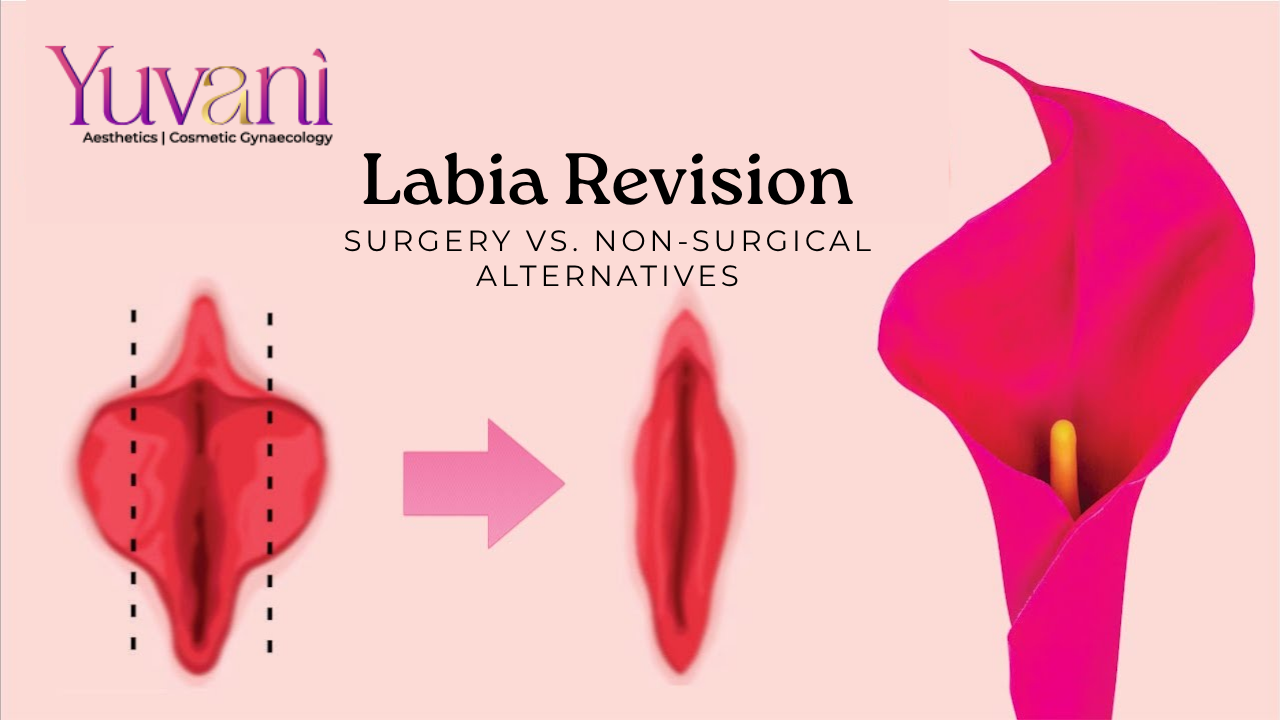
In recent years, more women have become aware of the options available to improve their intimate health, comfort, and confidence. Concerns related to the appearance, size, symmetry, or function of the labia can arise due to genetics, aging, childbirth, hormonal changes, or previous cosmetic procedures. As a result, many women explore treatments that can help address these concerns and improve their quality of life.
One common question patients ask is whether they should choose labia revision surgery or a non-surgical treatment. Both approaches offer benefits, but the best option depends on the individual's concerns, goals, anatomy, and expectations.
If you are considering Labia cosmetic surgery in Navi Mumbai or researching alternatives to surgery, understanding the differences between these treatments can help you make an informed decision.
Understanding Labial Concerns
The labia are folds of skin surrounding the vaginal opening. Every woman's anatomy is unique, and there is no single "normal" appearance. However, some women experience concerns that affect their comfort, confidence, or daily activities.
Common concerns include:
- Enlarged labia minora
- Labial asymmetry
- Excess tissue after childbirth
- Discomfort during exercise
- Irritation while wearing tight clothing
- Discomfort during intimacy
- Changes due to aging
- Dissatisfaction with previous labiaplasty results
When these concerns become bothersome, women often seek professional guidance regarding surgical and non-surgical solutions.
What Is Labia Revision Surgery?
Labia revision surgery is a surgical procedure designed to reshape, reduce, or correct the labia. It is commonly performed for women who:
- Have enlarged or elongated labia
- Experience discomfort due to excess tissue
- Have asymmetrical labia
- Are dissatisfied with previous labiaplasty results
- Want permanent correction of labial concerns
The procedure focuses on improving both appearance and function while maintaining natural anatomy.
Reasons Women Choose Labia Revision Surgery
Functional Improvement
Many women seek surgery because enlarged labial tissue causes:
- Chafing
- Irritation
- Hygiene difficulties
- Pain during exercise
- Discomfort while cycling or running
Cosmetic Enhancement
Some women feel self-conscious about the appearance of their labia and desire a more symmetrical or refined contour.
Correction of Previous Surgery
Revision procedures can address:
- Uneven results
- Excessive tissue removal
- Scar-related concerns
- Persistent asymmetry
Long-Term Results
One of the biggest advantages of surgery is that the results are generally long-lasting.
How Is Labia Revision Surgery Performed?
The exact surgical technique depends on the patient's anatomy and goals.
Common techniques include:
Trim Technique
Excess tissue along the edge of the labia is removed to create a smoother contour.
Wedge Technique
A wedge-shaped section of tissue is removed while preserving the natural edge of the labia.
Revision-Specific Corrections
In cases involving previous surgery, customized approaches may be used to restore symmetry and improve aesthetics.
The procedure is typically performed under local anesthesia with sedation or general anesthesia, depending on the complexity.
Benefits of Labia Revision Surgery
- Significant Tissue Reduction
Surgery can effectively remove excess tissue that cannot be addressed through non-surgical methods. - Permanent Results
The results are generally long-lasting and often require no maintenance treatments. - Improved Comfort
Many patients experience relief from physical discomfort and irritation. - Enhanced Confidence
Improved appearance often contributes to greater self-confidence and body positivity. - Functional Improvement
Activities such as exercise, cycling, and intimacy may become more comfortable.
Recovery After Labia Revision Surgery
Recovery varies among individuals but generally follows a predictable timeline.
First Few Days
Patients may experience:
- Mild swelling
- Bruising
- Tenderness
- Temporary discomfort
First Few Weeks
Most swelling gradually subsides, and normal activities can be resumed according to medical advice.
Complete Healing
Final results typically become visible after several weeks to a few months once tissues have fully healed.
Following post-operative instructions is essential for optimal outcomes.
What Are Non-Surgical Alternatives?
Many women prefer non-invasive treatments because they involve minimal downtime and avoid surgery.
However, it is important to understand that non-surgical treatments cannot remove excess labial tissue. Instead, they primarily focus on skin quality, tissue rejuvenation, and tightening.
Common non-surgical options include:
- Laser treatments
- Radiofrequency (RF) therapy
- Platelet-rich plasma (PRP) treatments
- Energy-based vaginal rejuvenation procedures
Laser-Based Treatments
Laser technologies stimulate collagen production and improve tissue quality.
Potential benefits include:
- Improved skin texture
- Enhanced tissue elasticity
- Better hydration
- Mild tightening effects
Laser treatments are often used for vaginal rejuvenation rather than significant labial reduction.
Radiofrequency Therapy
Radiofrequency devices deliver controlled heat to stimulate collagen remodeling.
Benefits may include:
- Improved firmness
- Enhanced tissue support
- Increased collagen production
- Minimal downtime
These treatments are generally comfortable and require little recovery.
PRP (Platelet-Rich Plasma) Therapy
PRP uses growth factors derived from the patient's own blood to encourage tissue regeneration.
Potential advantages include:
- Improved tissue quality
- Enhanced blood flow
- Better hydration
- Increased sensitivity in some cases
PRP is frequently combined with other rejuvenation procedures.
Benefits of Non-Surgical Treatments
- Minimal Downtime
Most patients return to normal activities shortly after treatment. - No Incisions
There are no surgical cuts or stitches involved. - Lower Immediate Recovery Burden
Patients avoid the recovery associated with surgery. - Gradual Improvements
Collagen stimulation continues over time, providing progressive enhancement.
Limitations of Non-Surgical Alternatives
While non-surgical treatments offer advantages, they also have limitations.
- Cannot Remove Excess Tissue
This is perhaps the most important limitation. Women with enlarged labia generally require surgery to achieve meaningful reduction. - Multiple Sessions May Be Needed
Many treatments require a series of sessions for optimal results. - Temporary Results
Maintenance treatments are often necessary to preserve improvements. - Limited Impact on Significant Asymmetry
Structural issues usually require surgical correction.
Labia Revision Surgery vs. Non-Surgical Alternatives
When Surgery Is Usually the Better Choice
Labia revision surgery is often recommended for women who have:
- Enlarged labia
- Significant asymmetry
- Excess tissue causing discomfort
- Previous unsatisfactory labiaplasty results
- Functional concerns affecting daily activities
Surgery provides the most predictable and long-lasting correction for these issues.
When Non-Surgical Treatments May Be Suitable
Non-surgical options may be appropriate for women who:
- Have mild cosmetic concerns
- Want tissue rejuvenation
- Seek improved skin quality
- Prefer to avoid surgery
- Have realistic expectations regarding results
These treatments can enhance tissue health but cannot achieve the same level of correction as surgery.
Which Option Delivers Better Results?
The answer depends on the patient's goals.
If the goal is:
Labial Reduction
Surgery is the most effective option.
Correcting Asymmetry
Surgery provides superior results.
Improving Tissue Quality
Non-surgical treatments can be beneficial.
Vaginal Rejuvenation
Energy-based therapies may provide noticeable improvements.
Permanent Structural Change
Surgery remains the gold standard.
Safety Considerations
Both surgical and non-surgical procedures can be safe when performed by qualified specialists.
The key factors include:
- Proper patient evaluation
- Realistic expectations
- Appropriate treatment selection
- Experienced medical professionals
- Comprehensive aftercare
Choosing a specialist experienced in intimate aesthetic procedures significantly improves outcomes and safety.
Questions to Ask During Your Consultation
Before choosing a treatment, consider asking:
- Am I a suitable candidate for surgery?
- Can my concerns be addressed without surgery?
- What results can I realistically expect?
- How long will recovery take?
- Are maintenance treatments required?
- What are the risks and benefits of each option?
A thorough consultation helps ensure the chosen treatment aligns with your goals.
Choosing the Right Specialist
Whether you are considering Labia cosmetic surgery in Navi Mumbai or exploring non-surgical rejuvenation procedures, selecting the right specialist is crucial.
Look for a doctor who:
- Has expertise in cosmetic gynecology
- Performs both surgical and non-surgical treatments
- Provides personalized treatment plans
- Prioritizes patient safety
- Offers comprehensive follow-up care
An individualized approach often produces the best functional and aesthetic outcomes.
Conclusion
Both labia revision surgery and non-surgical alternatives can help women improve comfort, confidence, and intimate wellness. However, they serve different purposes and address different concerns.
For women experiencing enlarged labia, significant asymmetry, discomfort, or dissatisfaction with previous procedures, Labia reduction surgery in Navi Mumbai often provides the most effective and long-lasting solution. Surgical correction remains the gold standard for structural changes and meaningful tissue reduction.
Non-surgical treatments, on the other hand, are best suited for women seeking tissue rejuvenation, collagen stimulation, and mild tightening without downtime. While they can improve tissue quality and overall intimate wellness, they cannot replace surgery when significant correction is required.
The best way to determine the ideal treatment is through a detailed consultation with an experienced cosmetic gynecologist who can assess your anatomy, discuss your goals, and recommend the most appropriate approach for your unique needs.

 Call Us
 WhatsApp