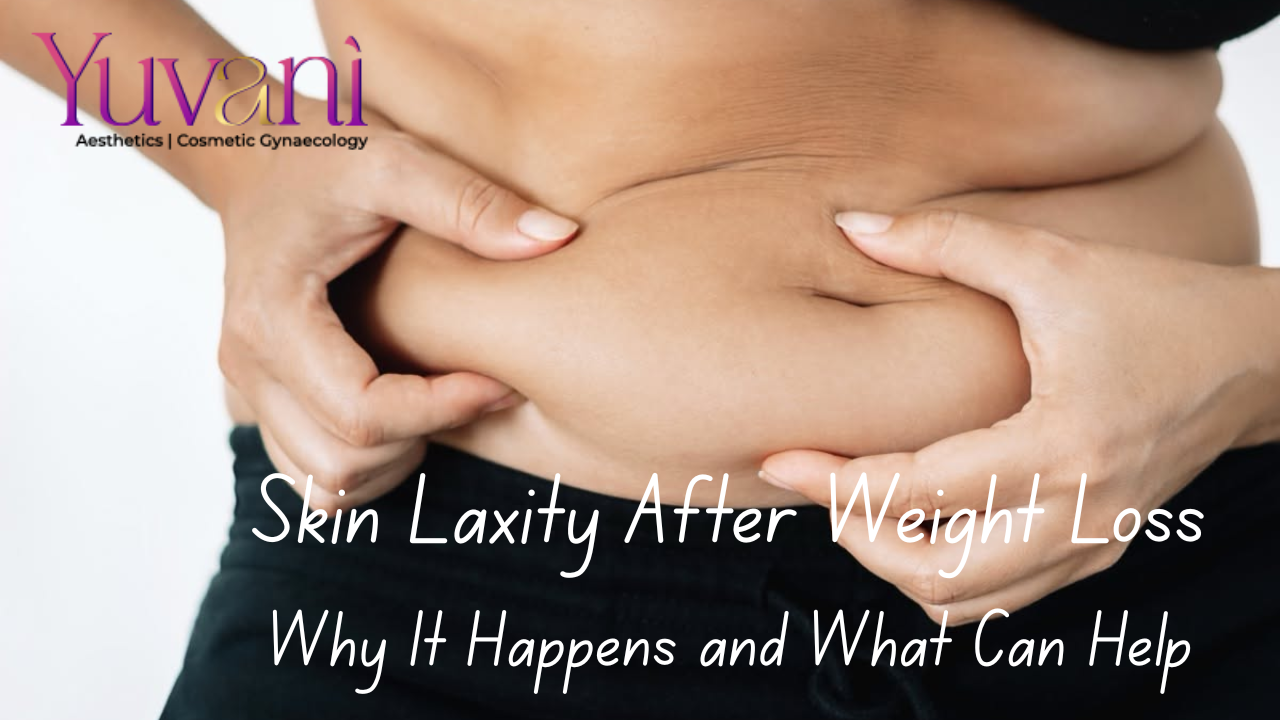
Losing a significant amount of weight can be an important achievement, but many people are surprised to discover that their body does not automatically return to its previous shape. After the fat decreases, loose or hanging skin may remain around the abdomen, arms, thighs, breasts, back, or other areas.
This is known as skin laxity after weight loss.
For some people, the loose skin is mild and gradually improves as the body adjusts. For others, especially after substantial weight loss, the skin may remain stretched and excess tissue can become a persistent concern.
Loose skin is not a sign that you have done something wrong. When skin has been stretched for a long time, its elasticity may not be sufficient to completely contract after the underlying volume decreases.
If loose skin is affecting your comfort, clothing choices, physical activity, or confidence, Body Contouring in Kharghar can offer different surgical and non-surgical options depending on the amount of excess skin and your individual goals.
Why Does Loose Skin Develop After Weight Loss?
Your skin has natural elasticity because of structural proteins such as collagen and elastin.
When the body gains weight, the skin stretches to accommodate the increased volume. If the skin remains stretched for an extended period, its ability to contract can become limited.
After substantial weight loss, the volume beneath the skin decreases. However, the stretched skin may not completely retract.
The result can be:
- Loose abdominal skin
- Hanging skin around the arms
- Sagging thighs
- Loose skin around the back
- Drooping skin around the breasts
- Folds around the abdomen or waist
- A softer or less defined body contour
The amount of loose skin varies significantly from person to person.
Why Doesn't Exercise Always Remove Loose Skin?
Exercise is extremely beneficial after weight loss. Strength training can help build muscle underneath the skin and may improve the overall shape of the body.
However, exercise cannot directly remove large amounts of excess skin.
For example, building the abdominal muscles may improve abdominal definition, but it cannot eliminate a large fold of stretched skin.
Similarly, arm exercises can strengthen the underlying muscles but cannot physically remove significant excess skin.
Exercise should therefore be viewed as part of maintaining a healthy body composition rather than a guaranteed treatment for substantial skin excess.
Does Loose Skin Tighten Naturally After Weight Loss?
Some degree of natural tightening may occur after weight loss.
How much improvement you see depends on several factors, including:
- Age
- Genetics
- Amount of weight lost
- Speed of weight loss
- How long the skin was stretched
- Skin quality
- Smoking history
- Sun exposure
- Overall health
- Hydration and nutrition
Younger skin generally has greater elasticity, but age alone does not determine whether loose skin will improve.
If the skin is mildly lax, it may gradually contract over time. However, significant excess skin often does not completely disappear without intervention.
Factors That Increase the Risk of Loose Skin
1. Significant Weight Loss
The greater the amount of weight lost, the more likely it is that excess skin may remain.
This is particularly noticeable after major lifestyle changes or substantial weight reduction following medical or surgical weight-loss treatment.
2. Age
Skin elasticity naturally decreases with age because collagen and elastin production changes over time.
This can make it more difficult for stretched skin to retract completely.
3. Genetics
Some people naturally have more elastic skin than others.
Genetics can influence collagen structure, skin thickness, and how the skin responds to changes in body size.
4. Duration of Being Overweight
Skin that has remained stretched for many years may have less ability to contract after weight loss than skin that was stretched for a shorter period.
5. Sun Exposure
Long-term ultraviolet exposure can contribute to collagen breakdown and premature loss of skin elasticity.
6. Smoking
Smoking can negatively affect skin health and collagen, potentially reducing skin quality and its ability to heal effectively after surgery.
Where Is Loose Skin Most Common After Weight Loss?
Although excess skin can occur almost anywhere, certain areas are particularly common.
Abdomen
The abdomen is one of the most frequent areas of concern. Loose abdominal skin may hang over the lower abdomen or form folds around the waist.
Arms
Significant weight loss can leave excess skin around the upper arms, sometimes creating a hanging appearance.
Thighs
The inner and outer thighs may develop loose skin after substantial weight reduction.
Breasts
Weight loss can reduce breast volume and contribute to sagging or changes in breast shape.
Back and Flanks
Loose tissue may develop around the sides of the waist and back, particularly after major weight loss.
Can Skincare Products Tighten Loose Skin?
Moisturisers can improve skin hydration and make the skin feel smoother, but they cannot remove significant excess skin.
Products containing ingredients such as retinoids may support certain aspects of skin health, but topical skincare generally cannot reproduce the effect of removing a large amount of excess tissue.
This is an important distinction.
Skin quality and skin quantity are different problems.
If the primary issue is significant excess skin, creams alone are unlikely to provide a dramatic change.
Can Non-Surgical Treatments Improve Skin Laxity?
Some non-surgical treatments can improve mild to moderate skin laxity in selected patients.
Depending on the individual's skin and treatment goals, options may include technologies based on:
- Radiofrequency
- Ultrasound
- Energy-based skin tightening
- Other collagen-stimulating technologies
These treatments work by delivering controlled energy to the skin and underlying tissues, which can stimulate collagen remodelling.
They may provide gradual tightening and improvement in skin texture.
However, non-surgical treatments generally have limitations when there is a large amount of hanging or redundant skin.
They may be more appropriate when the concern is loose or mildly sagging skin rather than substantial excess tissue.
When Is Surgical Body Contouring Considered?
When a significant amount of excess skin remains after weight loss, surgical body contouring may be considered.
The goal is to remove excess skin and reshape selected areas of the body.
Depending on the patient's anatomy and concerns, procedures may include:
- Abdominoplasty
- Arm lift
- Thigh lift
- Lower body lift
- Breast lift
- Back or flank contouring
- Combination body-contouring procedures
The appropriate procedure depends on where excess skin is located and how much correction is required.
What Is an Abdominoplasty?
An abdominoplasty, commonly called a tummy tuck, is a surgical procedure designed to remove excess abdominal skin and, when appropriate, address separation or laxity of the abdominal muscles.
It may be considered for people who have:
- Significant loose abdominal skin
- Persistent lower abdominal folds
- Skin laxity after substantial weight loss
- Abdominal contour concerns that do not respond to exercise
A tummy tuck is not primarily a weight-loss procedure.
It is a body-contouring procedure designed to reshape the abdomen after weight has stabilised.
What Is an Arm Lift?
An arm lift, or brachioplasty, is designed to remove excess skin from the upper arms.
After substantial weight loss, some people are left with loose tissue that hangs from the upper arm.
Strength training can build the underlying muscle, but it cannot remove a significant skin fold.
An arm lift may be considered when excess skin is the primary concern.
What Is a Thigh Lift?
A thigh lift is designed to address excess skin around the thighs.
It may be considered when significant weight loss leaves loose skin that causes:
- Friction
- Chafing
- Difficulty with clothing
- Discomfort during activity
- Concerns about body contour
The exact approach depends on whether the excess skin is primarily on the inner thigh, outer thigh, or extends around the lower body.
What About Loose Skin Around the Breasts?
Weight loss can reduce breast volume and alter the position and shape of the breasts.
Some patients may benefit from a breast lift to remove excess skin and reposition the breast tissue.
In selected cases, augmentation may also be discussed if additional volume is desired.
The appropriate procedure depends on the individual's anatomy and goals.
Liposuction vs Body Contouring for Loose Skin
These procedures are often confused, but they address different problems.
Liposuction primarily removes localised deposits of fat.
Body contouring surgery can remove excess skin and reshape areas where significant laxity remains.
Someone can be relatively lean but still have substantial excess skin after weight loss.
In such cases, removing more fat may not improve the appearance and could potentially make skin laxity more noticeable.
A proper assessment is therefore important before deciding between procedures.
Can Body Contouring Be Combined With Liposuction?
In selected patients, body contouring and liposuction may be performed together.
For example, a surgeon may use liposuction to improve contour around an area while removing excess skin through a surgical lift.
However, combining procedures is not appropriate for everyone.
The decision depends on:
- Overall health
- Amount of excess skin
- Body composition
- Surgical goals
- Procedure complexity
- Expected recovery
- Safety considerations
Your surgeon should explain whether combining procedures is appropriate in your situation.
When Is the Right Time for Body Contouring After Weight Loss?
It is generally preferable to consider body-contouring surgery after your weight has become relatively stable.
If significant weight loss is still expected, undergoing surgery too early may affect the final contour.
Your surgeon may consider factors such as:
- Current weight
- Weight stability
- Overall health
- Nutritional status
- Future weight-loss plans
- Pregnancy plans, when relevant
There is no single timeline that applies to everyone.
What Should You Do Before Body Contouring?
Preparation can have an important impact on safety and recovery.
Your surgeon may recommend:
- Maintain a stable weight: Avoid major weight fluctuations before surgery.
- Focus on nutrition: Adequate protein, vitamins, minerals, and overall nutrition support healing.
- Stop smoking: Smoking can impair wound healing and increase surgical risks. If you smoke, discuss cessation with your doctor before surgery.
- Review medications: Tell your doctor about all prescription medicines, supplements, and over-the-counter products you use.
- Have realistic expectations: Body contouring can remove excess skin and improve body shape, but it cannot create a completely different body or eliminate every imperfection.
Recovery After Body Contouring
Recovery depends on the specific procedure and how extensive the surgery is.
You may experience:
- Swelling
- Bruising
- Tightness
- Tenderness
- Temporary numbness
- Fatigue
Your surgeon will provide instructions regarding wound care, compression garments when appropriate, activity restrictions, and follow-up appointments.
Strenuous exercise usually needs to be avoided during the early recovery period.
Gradual return to normal activity is recommended according to your surgeon's guidance.
What Are the Risks?
Body-contouring surgery is major surgery, and understanding the potential risks is essential.
Possible complications may include:
- Bleeding
- Infection
- Fluid collection
- Wound-healing problems
- Scarring
- Changes in skin sensation
- Asymmetry
- Blood clots
- Need for revision surgery
The level of risk varies according to the procedure, your health, and other individual factors.
A detailed consultation is necessary before surgery.
Will Body Contouring Remove All Loose Skin?
The goal is to improve the contour by removing appropriate excess tissue, but no procedure can guarantee perfectly tight or completely smooth skin.
The final result can be influenced by:
- Skin elasticity
- Surgical techniqu

 Call Us
 WhatsApp