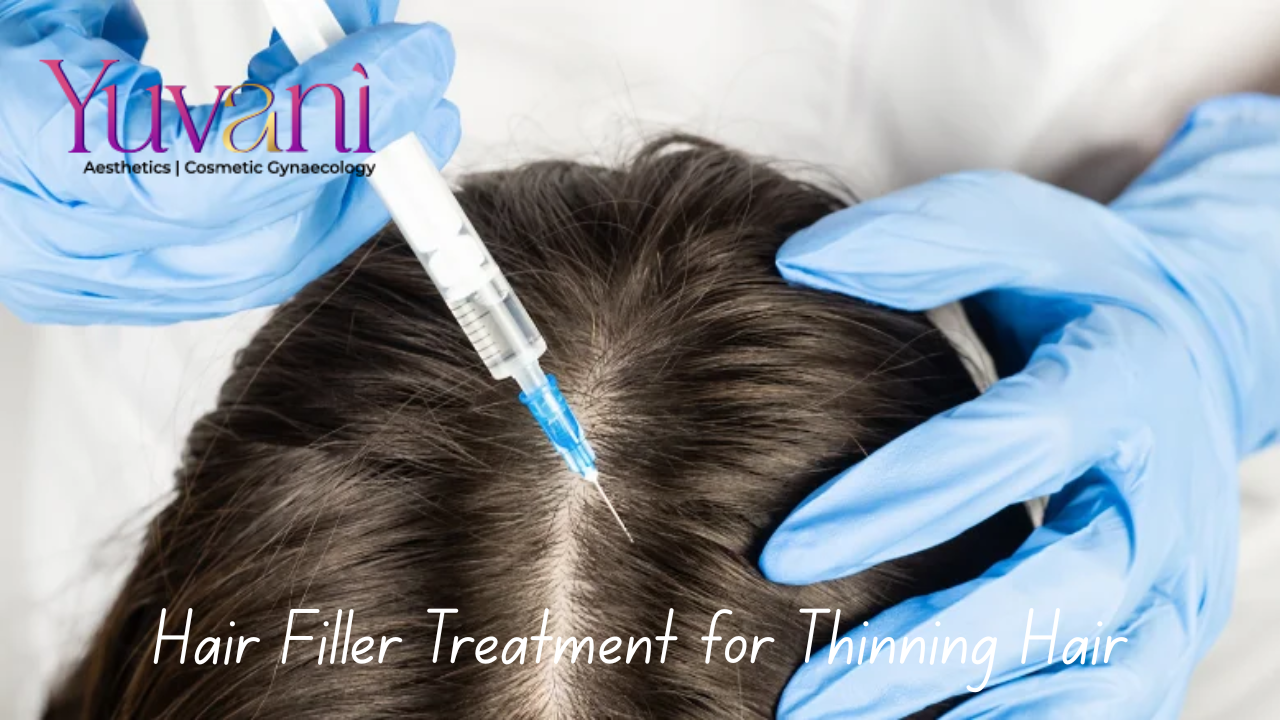
Noticing more hair on your pillow, a widening hair part, or reduced volume around the crown can be frustrating. Hair thinning often develops gradually, making it difficult to identify when the problem started or what might be causing it. While shampoos and hair oils may help improve the appearance of your hair, they may not address the underlying reason for thinning.
This is why treatments such as hair fillers are attracting attention among people looking for non-surgical options for hair loss.
Hair Filler Treatment in Navi Mumbai may be considered by individuals experiencing certain types of hair thinning who want to explore options beyond conventional hair care. However, the effectiveness of this treatment depends on the product used, the cause of hair loss, and the condition of the hair follicles.
So, does hair filler treatment really work? Let's understand how it works, who may benefit, what results to expect, and how it compares with other hair restoration options.
What Is Hair Filler Treatment?
Hair filler treatment is a non-surgical procedure that involves administering a specialised formulation into the scalp. Depending on the product, the formulation may contain peptides or other ingredients intended to support the scalp environment and hair follicle function.
Unlike conventional dermal fillers used to restore facial volume, hair fillers are designed for scalp and hair-related concerns.
The term "hair filler" can refer to different products, so it is important to understand that not all formulations work in the same way. Their ingredients, evidence, approved uses, and treatment protocols can vary.
Hair filler treatment is generally discussed for concerns such as:
- Early hair thinning
- Reduced hair density
- Fine or weakened-looking hair
- Gradual thinning around the crown
- Widening of the hair part
- Certain patterns of hair loss where follicles are still present
It is not the same as a hair transplant, and it should not be assumed to restore hair in areas where follicles have been permanently lost.
How Does Hair Filler Treatment Work?
The exact mechanism depends on the formulation being used. Some hair filler products contain peptides that are intended to influence biological processes associated with hair follicle activity.
The goal is to support the scalp and existing follicles rather than physically fill empty areas with new hair.
1. Supporting Existing Hair Follicles
Some formulations are designed to support the environment around existing hair follicles. Whether this translates into visible improvement depends on the product and the underlying cause of thinning.
2. Improving the Appearance of Hair Density
If a treatment helps reduce thinning or supports existing hair, the scalp may become less visible in affected areas. However, results are not guaranteed, and the treatment may not be effective for every type of hair loss.
3. Supporting Hair Thickness
Some patients seek hair filler treatment because their hair strands appear finer or weaker than before. Certain products are marketed for this concern, but claims about increasing hair thickness should be assessed against clinical evidence for the specific formulation.
4. Complementing a Hair Restoration Plan
Hair filler treatment may be discussed alongside other treatments when clinically appropriate. However, combining procedures does not automatically improve outcomes, and every treatment should have a clear purpose.
Does Hair Filler Treatment Really Work for Thinning Hair?
Hair filler treatment may help selected individuals, but it is not a guaranteed solution for hair loss.
The results depend on several factors, including the cause of thinning, the condition of the follicles, the ingredients in the product, and the treatment protocol.
For example, a person with early pattern hair thinning may have different treatment needs from someone experiencing hair shedding after an illness or someone with an inflammatory scalp condition.
It is also important to distinguish between marketing claims and established clinical evidence. Research supporting one hair filler formulation cannot automatically be applied to every product sold under the same name.
Before starting treatment, ask your practitioner what evidence supports the specific product and what degree of improvement is realistic.
Who May Benefit From Hair Filler Treatment?
Hair filler treatment may be discussed with people experiencing selected forms of hair thinning, particularly when viable follicles remain.
You may be considered for treatment if you have:
- Gradual thinning that has been medically assessed
- Reduced hair density
- Fine-looking hair in areas of thinning
- Early signs of pattern hair loss
- A preference for exploring non-surgical treatment options
However, suitability should be determined through a professional assessment rather than symptoms alone.
Hair filler treatment may be less useful when hair loss is advanced, follicles have been permanently destroyed, or an untreated medical condition is responsible for the problem.
What Causes Hair Thinning in the First Place?
Understanding the cause of hair thinning is essential because not every type of hair loss responds to the same treatment.
Genetic Hair Loss
Androgenetic alopecia, also known as pattern hair loss, is associated with genetic and hormonal factors. It can affect both men and women and often develops gradually.
Hormonal Changes
Hormonal changes associated with conditions such as polycystic ovary syndrome, pregnancy, childbirth, or menopause may contribute to hair thinning in some individuals.
Nutritional Deficiencies
Low iron levels and certain nutritional deficiencies can contribute to hair loss. Identifying and correcting a confirmed deficiency may be more important than undergoing a cosmetic procedure.
Stress and Illness
Significant physical or emotional stress, illness, surgery, and rapid weight loss can trigger increased shedding. This is sometimes associated with a condition called telogen effluvium.
Scalp Conditions
Inflammation, infections, and certain autoimmune conditions can cause hair loss. Some conditions require prompt medical treatment to prevent permanent damage to the follicles.
A dermatologist or qualified hair specialist can help identify the likely cause and recommend appropriate investigations where necessary.
Hair Filler Treatment vs PRP: Which Is Better?
Hair filler treatment and PRP are both offered as non-surgical options for selected hair concerns, but they are different procedures.
PRP, or platelet-rich plasma, is prepared from the patient's own blood. The blood is processed to concentrate platelets, and the resulting plasma is administered to the scalp.
Hair filler products, on the other hand, contain a formulation that varies by brand and may include peptides or other ingredients.
| Feature | Hair Filler Treatment | PRP Hair Treatment |
|---|---|---|
| Main approach | Uses a specialised scalp formulation | Uses platelet-rich plasma from your own blood |
| Preparation | Depends on the product | Requires blood collection and processing |
| Ingredients | Vary by formulation | Derived from the patient's blood |
| Evidence | Depends on the specific product | More clinical research is available for selected hair-loss conditions |
| Treatment schedule | Depends on the product and protocol | Often involves an initial series of sessions |
| Suitability | Depends on the formulation and diagnosis | Depends on the type of hair loss and patient factors |
Neither option is universally better. PRP has a larger body of clinical research for certain forms of pattern hair loss, although results still vary. Hair filler treatment should be evaluated according to the evidence supporting the particular product being offered.
Your specialist can explain which option, if any, is appropriate for your condition.
Hair Filler Treatment vs Exosome Hair Treatment
Exosome-based hair treatments are another option being explored for hair thinning.
Exosomes are extracellular vesicles involved in cell-to-cell communication. Products marketed for hair treatment are intended to influence signalling processes around hair follicles, although evidence remains limited and products can differ considerably.
Hair filler formulations and exosome products are not interchangeable.
The key differences include:
- Product composition: Hair fillers may contain peptides or other ingredients, while exosome products contain extracellular vesicles or preparations marketed as such.
- Evidence: Clinical evidence varies by product. Exosome-based hair treatments remain an emerging area with important unanswered questions.
- Quality and regulation: The source, manufacturing process, safety controls, and regulatory status should be checked carefully for either treatment.
- Expected outcomes: Neither treatment guarantees hair regrowth.
Do not assume that a treatment is more effective simply because it is newer or described as regenerative.
What Happens During a Hair Filler Treatment Session?
The procedure varies depending on the product and the practitioner's protocol. If the treatment involves scalp injections, a typical appointment may include the following steps.
Step 1: Scalp and Hair Assessment
The practitioner reviews your hair loss pattern, medical history, current medications, previous treatments, and expectations.
A scalp examination or trichoscopy may be recommended to assess the follicles and identify signs of scalp disease.
Step 2: Preparing the Scalp
The scalp is cleaned, and the practitioner explains the procedure and possible side effects. Pain-relief measures may be considered depending on the treatment.
Step 3: Administering the Product
The product is administered to selected areas according to its instructions and the treatment protocol.
Step 4: Aftercare Guidance
You receive instructions about scalp care, washing your hair, exercise, and other activities following treatment. These recommendations depend on the product and procedure.
Before treatment, ask for the product name, ingredients, source, intended use, and evidence supporting its effectiveness.
How Many Hair Filler Sessions Are Needed?
There is no single session schedule for every hair filler product.
Some protocols recommend an initial course of treatments, while others differ in session frequency and maintenance requirements.
The number of sessions may depend on:
- The extent of hair thinning
- The formulation being used
- The treatment area
- Your response to the procedure
- The practitioner's evidence-based protocol
Be cautious of promises that a fixed number of sessions will definitely restore your hair. A responsible treatment plan should include follow-up assessments to determine whether the procedure is providing meaningful improvement.
When Can You Expect to See Results?
Hair growth is a gradual process, so visible changes generally cannot be assessed immediately after treatment.
If a treatment is effective for your particular condition, changes may take several months to become noticeable. Some people may experience little or no visible improvement.
Results also depend on whether the underlying cause of hair loss is being addressed. For example, ongoing genetic hair loss may require long-term management even if a procedure initially improves the appearance of the hair.
Photographs taken before treatment and during follow-up can help you and your practitioner assess changes more objectively.
Are There Any Side Effects?
Hair filler treatment may cause temporary side effects, especially when the product is administered through injections.
Possible effects include:
- Mild pain or tenderness
- Redness around injection sites
- Swelling
- Bruising
- Temporary scalp sensitivity
- Irritation or an inflammatory reaction
The risks depend on the formulation, administration technique, sterility, and individual medical history.
Tell your practitioner about any allergies, scalp conditions, medications, or previous reactions to injectable treatments before proceeding.
Seek medical advice if you develop severe or worsening pain, spreading redness, fever, discharge, or other unexpected symptoms after treatment.
Can Hair Filler Treatment Replace Hair Transplant Surgery?
No. Hair filler treatment and hair transplantation serve different purposes.
Hair transplantation involves moving hair follicles from a donor area to areas affected by hair loss. It may be considered for selected patients with established hair loss who have suitable donor hair.
Hair filler treatment is a non-surgical procedure intended to support certain aspects of scalp or hair health, depending on the formulation. It does not physically transplant follicles into bald areas.
For extensive or advanced hair loss, a hair transplant assessment may be more appropriate than relying on injectable treatments alone. Some patients may also benefit from medical treatments to manage ongoing hair loss.
What Other Treatments Can Help With Hair Thinning?
Depending on the diagnosis, your specialist may recommend established treatments instead of, or alongside, a cosmetic procedure.
Options may include:
- Topical minoxidil: A commonly used treatment for certain forms of pattern hair loss.
- Prescription medications: Selected patients may benefit from medications prescribed according to their sex, medical history, and type of hair loss.
- Nutritional correction: Confirmed deficiencies should be addressed with appropriate medical guidance.
- Scalp treatment: Inflammatory or infectious conditions may require specific medication.
- PRP: May be considered for selected patients with pattern hair loss.
- Hair transplantation: May be an option for appropriate candidates with established hair loss.
Not every treatment is suitable for every patient. Diagnosis should come before choosing a procedure.
How to Choose a Hair Filler Clinic in Navi Mumbai
If you are considering Hair Filler Treatment in Navi Mumbai, selecting a qualified provider is an important part of the process.
Before booking a session, consider asking:
- What is the exact name and composition of the hair filler product?
- What clinical evidence supports its use for my type of hair loss?
- Is the product appropriately authorised for its intended use?
- Who will perform the procedure, and what are their qualifications?
- What results are realistic in my case?
- What are the possible side effects and alternatives?
- What is the total treatment cost, including follow-up or maintenance?
A trustworthy provider should explain the limitations of treatment and avoid promising guaranteed regrowth.
Final Thoughts
Hair filler treatment may be an option for selected people experiencing thinning hair, but its effectiveness depends on the product, the cause of hair loss, and the condition of the follicles.
Before choosing Hair Filler Treatment in Navi Mumbai, it is worth getting a proper assessment to understand why your hair is thinning and whether the proposed treatment has sufficient evidence to support its use.
For some individuals, a hair filler procedure may be discussed as part of a broader hair restoration plan. Others may benefit more from established medical treatments, PRP, correction of an underlying deficiency, or a hair transplant assessment.
The best approach is one that addresses the cause of your hair loss, sets realistic expectations, and prioritises scalp health and long-term management.
Frequently Asked Questions
Does hair filler treatment really work for thinning hair?
It may help selected individuals, depending on the product and the cause of hair thinning. Results are not guaranteed, and the evidence should be evaluated for the specific formulation being offered.
Is hair filler treatment painful?
If the procedure involves scalp injections, you may experience mild discomfort, tenderness, or temporary sensitivity. The level of discomfort varies with the technique and product.
How long does hair filler treatment take to show results?
If the treatment is effective, visible changes may take several months. The timing varies, and some people may not experience significant improvement.
Is hair filler treatment safe?
Its safety depends on the ingredients, product quality, administration technique, and individual medical history. A qualified professional should explain the risks before treatment.
Is hair filler treatment better than PRP?
Not necessarily. PRP has more clinical research for certain types of hair loss, while the evidence for hair filler products varies by formulation. A specialist can help compare the options for your condition.
Can women undergo hair filler treatment?
Women may be considered for treatment if they are suitable candidates. However, hormonal changes, nutritional deficiencies, and other causes of female hair thinning should be evaluated first.
Can hair filler treatment regrow hair in completely bald areas?
It should not be expected to restore follicles that have been permanently lost. Advanced hair loss may require other approaches, depending on the diagnosis and suitability for treatment.

 Call Us
 WhatsApp