Peptide Hair Treatment in Navi Mumbai
Hair thinning, excessive hair fall, and reduced hair density can affect both men and women. While conventional hair-loss treatments remain important, advances in aesthetic medicine have introduced additional approaches designed to support the scalp and hair follicles.
Peptide Hair Treatment in Navi Mumbai is a minimally invasive treatment approach that uses peptide-based formulations intended to support the hair-growth environment and the health of existing hair follicles. At YUVANI Aesthetic Clinic in Kharghar, Navi Mumbai, treatment is planned after evaluating the individual's pattern of hair loss, scalp condition, hair density, and treatment goals.
Peptide-based hair treatments may be considered as part of a personalized hair-loss management plan for selected patients.
“Peptide hair treatment focuses on supporting cellular signaling around the hair follicle, creating a more favorable environment for existing follicles and promoting hair density.”
What Is Peptide Hair Treatment?
Peptides are short chains of amino acids that can participate in biological signaling processes. Certain peptides have been investigated for their potential role in supporting hair follicles and influencing processes associated with hair growth.
Peptide-based hair treatments may involve formulations containing specific peptides or combinations of bioactive ingredients. The exact formulation and method of administration can vary depending on the treatment protocol.
Research has investigated different peptide formulations for pattern hair loss. For example, a randomized controlled study of a topical penta-peptide formulation reported an improvement in the proportion of thicker hair in men with androgenetic alopecia. However, evidence varies considerably between different peptide formulations and treatment methods.
How Does Peptide Hair Treatment Work?
The proposed role of peptide therapy is to support cellular signaling around the hair follicle and create a more favorable environment for existing follicles.
Depending on the formulation and delivery method, peptide-based treatments may be designed to:
- Support the activity of existing hair follicles
- Help improve the appearance of thinning hair
- Support hair shaft quality and density
- Complement other hair-loss treatments
- Address selected cases of early or progressive hair thinning
The response depends on the underlying cause of hair loss, the condition of the follicles, the treatment formulation, and individual factors.
Peptide Treatment for Hair Loss
Hair loss can occur for many different reasons. Androgenetic alopecia, hormonal changes, nutritional deficiencies, stress, medical conditions, and certain medications can all contribute to hair thinning or excessive shedding.
For this reason, identifying the cause of hair loss is an important first step.
Peptide treatment may be considered for selected patients with:
- Early-stage pattern hair loss
- Hair thinning
- Reduced hair density
- Weak or miniaturized hair
- Certain cases of excessive hair shedding
- Male pattern hair loss
- Female pattern hair loss
A consultation is recommended before treatment to determine whether peptide therapy is appropriate and whether another treatment or a combination approach would be more suitable.
Benefits of Peptide Hair Treatment
Depending on the formulation and individual response, peptide-based hair treatment may offer potential benefits such as:
Supports Existing Hair Follicles
Peptide formulations are designed to support biological processes associated with the hair follicle and may be considered where viable follicles are still present.
May Support Hair Density
Selected peptide-based treatments have been investigated for their potential to improve the appearance of thinning hair and hair density.
Minimally Invasive Approach
Some peptide hair treatments are administered through minimally invasive techniques rather than surgical procedures.
Can Be Personalized
Treatment can be planned according to the patient's hair-loss pattern, scalp condition, treatment goals, and overall hair-care plan.
May Complement Other Hair Treatments
Depending on the diagnosis, peptide therapy may be considered alongside other established or supportive approaches to hair-loss management.
Who Is a Good Candidate for Peptide Hair Treatment?
Peptide hair treatment may be considered for adults experiencing certain types of hair thinning or reduced hair density.
Potential candidates may include people with:
- Early-stage androgenetic alopecia
- Male pattern hair loss
- Female pattern hair loss
- Mild to moderate hair thinning
- Reduced hair density
- Miniaturized hair follicles
- Ongoing hair concerns where viable follicles remain
Not every type of hair loss is suitable for peptide therapy. A medical evaluation is important, particularly when hair loss is sudden, severe, patchy, or associated with scalp symptoms.
Peptide Hair Treatment for Men and Women
Pattern hair loss affects both men and women, although the distribution and progression can differ.
Men may develop gradual thinning around the hairline, temples, or crown, while women may experience more diffuse thinning or reduced density across the scalp.
Because the underlying causes and patterns can differ, the treatment approach should be individualized rather than applying the same protocol to every patient.
What Happens During Peptide Hair Treatment?
The treatment process depends on the specific peptide formulation and method used at the clinic:
1
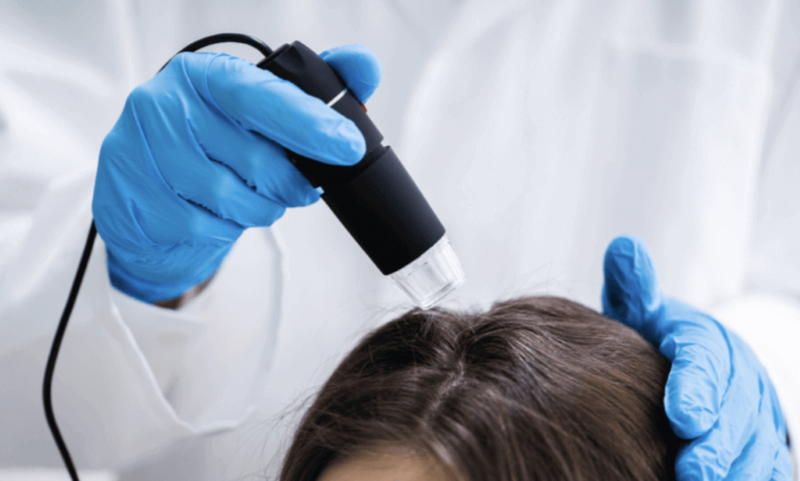
Hair and Scalp Assessment
The doctor evaluates your scalp, hair density, pattern of hair loss, medical history, and treatment goals.
2
Treatment Planning
If peptide therapy is considered appropriate, the doctor discusses the treatment formulation, method of administration, expected course, and possible alternatives.
3
Peptide Treatment
The selected peptide formulation is administered according to the treatment protocol. Depending on the treatment, delivery may involve targeted application or minimally invasive scalp administration.
4
Aftercare and Follow-Up
Post-treatment instructions are provided according to the procedure performed. Follow-up allows the doctor to assess your response and determine whether additional sessions or complementary treatments are appropriate.
How Many Peptide Hair Treatment Sessions Are Needed?
There is no single session schedule that applies to every peptide-based hair treatment.
The recommended number and frequency of sessions depend on:
- The peptide formulation being used
- Method of administration
- Type and severity of hair loss
- Scalp condition
- Individual response
- Treatment goals
Your doctor can explain the expected treatment schedule during consultation.
Peptide Hair Treatment Results
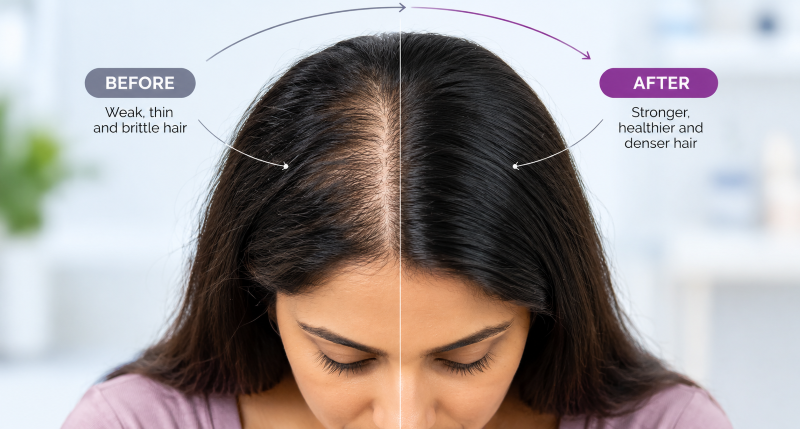
Results vary depending on the cause of hair loss, the condition of the hair follicles, the formulation used, and individual response.
Peptide treatment should not be presented as a guaranteed hair-regrowth solution. The objective may be to support existing follicles and improve the appearance of thinning hair in appropriately selected patients.
Patients with advanced hair loss or extensive follicular loss may require different treatment options.
Peptide Hair Treatment in Kharghar, Navi Mumbai
YUVANI Aesthetic Clinic provides personalized hair and aesthetic treatments in Kharghar, Navi Mumbai.
For patients considering peptide hair treatment, the consultation focuses on understanding the pattern and possible cause of hair loss before selecting an appropriate treatment approach.
Depending on the diagnosis, peptide therapy may be considered independently or as part of a broader hair-loss management plan.
Peptide Hair Treatment vs Other Hair Treatments
Different hair treatments work through different approaches and are suitable for different situations:
- GFC: Uses growth factors prepared from the patient's own blood and is intended to support existing follicles.
- PRP: Uses platelet-rich plasma prepared from the patient's blood and is commonly used as an injectable approach for selected hair-loss conditions.
- Peptide Treatment: Uses specific peptide-based formulations intended to support biological processes associated with hair follicles.
- Exosome Treatment: Uses preparations marketed for their signaling and regenerative potential, although clinical evidence and treatment protocols remain an evolving area.
The most appropriate treatment depends on the diagnosis, scalp condition, and individual treatment goals.
Why Choose YUVANI for Peptide Hair Treatment?
At YUVANI Aesthetic Clinic, hair treatments are planned according to the patient's individual condition rather than using a one-size-fits-all approach. Patients receive:
- Personalized hair and scalp assessment
- Doctor-led treatment planning
- Evaluation of the underlying hair-loss pattern
- Individualized treatment recommendations
- Appropriate post-treatment guidance
- Follow-up based on treatment response
Hair Treatments at YUVANI
YUVANI offers several treatment options for patients concerned about hair loss, thinning, and reduced hair density:
Each treatment works through a different approach, and the appropriate option can be discussed during a personalized consultation.
Frequently Asked Questions
What is Peptide Hair Treatment?
Peptide hair treatment uses a peptide-based formulation intended to support the hair follicle and the scalp environment. Different formulations and delivery methods may be used depending on the treatment protocol.
Can peptide treatment help with hair loss?
Certain peptide formulations have been investigated for hair loss and hair thinning, but evidence varies between products and treatment methods. Suitability depends on the cause and stage of hair loss.
Is peptide treatment suitable for male pattern hair loss?
Peptide-based approaches have been studied in androgenetic alopecia, including male pattern hair loss. A consultation can determine whether it is appropriate for your individual condition.
Can women undergo peptide hair treatment?
Yes. Peptide-based treatment may be considered for selected women experiencing hair thinning or pattern hair loss after appropriate assessment.
How many peptide treatment sessions are required?
The number of sessions depends on the formulation, delivery method, hair-loss pattern, and individual response. Your treatment schedule will be determined after consultation.
Is peptide hair treatment painful?
The level of discomfort depends on how the peptide formulation is administered. If a minimally invasive injection technique is used, patients may experience temporary discomfort or sensitivity at the treatment site.
How soon will I see results?
Hair growth is a gradual process, and the timeline varies between individuals. Your doctor can discuss realistic expectations based on your diagnosis and treatment plan.
Can peptide treatment be combined with other hair treatments?
Depending on the underlying condition, peptide treatment may be incorporated into a broader hair-loss management plan. Your doctor can determine whether combining treatments is appropriate.
Is peptide treatment a permanent solution for hair loss?
No treatment can guarantee permanent hair regrowth. Hair-loss management depends on the underlying cause, follicle health, ongoing treatment, and individual response.
Consult for Peptide Hair Treatment in Navi Mumbai
If you are experiencing hair thinning, excessive hair fall, or reduced hair density, identifying the underlying cause is an important first step.
At YUVANI Aesthetic Clinic in Kharghar, Navi Mumbai, a personalized consultation can help assess your hair-loss pattern and determine whether Peptide Hair Treatment or another hair-loss treatment is appropriate for you.
Book a consultation to discuss your hair concerns and explore personalized treatment options.
Book a Consultation

 Call Us
 WhatsApp