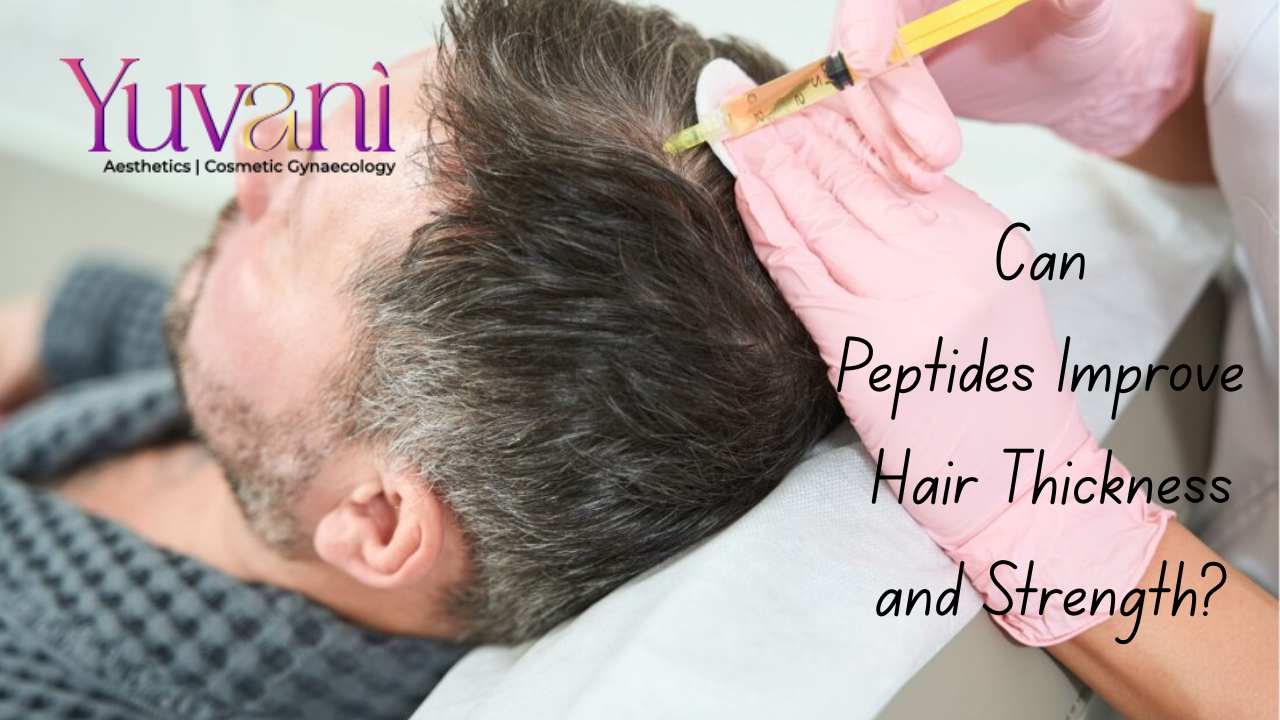
Hair that looks thinner, feels weaker, or breaks easily can be frustrating to manage. You may notice more hair on your pillow, reduced volume while styling, a widening hair parting, or strands that seem less dense than before. These changes can occur due to genetics, hormonal fluctuations, nutritional deficiencies, stress, ageing, or damage to the hair shaft.
While traditional hair care products mainly focus on cleansing, conditioning, and protecting the hair, advanced scalp treatments are being explored to address concerns related to hair thinning and hair quality.
One option gaining attention is peptide-based hair treatment. Peptides are short chains of amino acids that are used in various skincare and hair care formulations. Certain peptides are being studied for their potential role in supporting scalp health and biological processes associated with hair follicle activity.
But can peptides actually make hair thicker and stronger? Are peptide-based treatments suitable for people experiencing hair thinning, and how do they compare with other hair restoration options?
If you are considering Peptide Hair Treatment in Navi Mumbai, this guide explains how peptides work, their potential benefits, limitations, and what to consider before choosing a treatment.
What Are Peptides?
Peptides are short chains of amino acids, which are the building blocks of proteins. Different combinations of amino acids form different peptides, each with its own structure and biological properties.
In the body, certain peptides act as signalling molecules and participate in processes related to cell communication, tissue function, and repair.
In hair care and aesthetic treatments, specific peptides are being investigated or used in formulations designed to support scalp health and improve the appearance of thinning hair.
However, not all peptides work in the same way. Their effects depend on their molecular structure, concentration, formulation, delivery method, and the specific biological pathway they are intended to influence.
It is also important to distinguish between topical peptide products, injectable peptide formulations, and other professional scalp treatments. They are not interchangeable, and the evidence supporting each product can vary.
How May Peptides Support Hair Growth?
Hair growth is a complex process involving hair follicles, hormones, blood supply, and several biological signalling pathways.
Each hair follicle goes through a repeating growth cycle consisting of three main phases:
- Anagen (growth phase): The follicle actively produces a hair strand. This phase can last several years.
- Catagen (transition phase): Hair growth slows, and the follicle begins to shrink.
- Telogen (resting phase): The follicle rests before the hair is shed and a new growth cycle begins.
Certain peptides are being studied for their possible influence on biological processes associated with this cycle.
Depending on the peptide, proposed areas of interest include:
- Cellular signalling: Certain peptides may interact with pathways involved in cell activity.
- Follicle-related activity: Researchers are investigating whether selected peptides can influence processes associated with hair follicle function.
- Scalp environment: Some formulations are designed to support scalp condition and hair health.
- Hair fibre appearance: Certain cosmetic peptides may help improve the appearance or condition of the hair shaft.
These are potential mechanisms, not guaranteed clinical outcomes. Evidence for peptide-based hair treatments varies, and more well-designed human studies are needed to establish which formulations are effective for specific types of hair loss.
Can Peptides Improve Hair Thickness?
Hair thickness can refer to two different things:
- The diameter of an individual hair strand.
- The overall density of hair follicles across the scalp.
These are not the same. A person may have fine hair strands but a normal number of follicles, while another person may have reduced hair density due to follicle miniaturisation or hair loss.
Certain peptide formulations are marketed to support hair thickness and improve the appearance of thinning hair.
Their potential role may involve supporting the scalp environment or influencing pathways associated with follicle activity. However, it has not been established that all peptide treatments increase individual hair strand diameter or produce measurable improvements in hair density.
If hair thinning is caused by androgenetic alopecia, medical treatments with stronger clinical evidence may be more appropriate.
Potential Benefits of Peptide Hair Treatment
Peptide-based hair treatments are being explored for several hair and scalp concerns. Their benefits depend on the specific ingredients and formulation.
1. May Support the Appearance of Thinning Hair
Some peptide formulations are designed to support scalp health and hair follicle-related activity.
They may be considered as part of a broader hair care or hair restoration plan for selected individuals experiencing early thinning.
However, improvements in hair density are not guaranteed, and the effectiveness of different peptide products can vary.
2. May Help Improve Hair Strength
Weak hair strands can break easily due to excessive heat styling, chemical treatments, rough handling, and environmental exposure.
Some cosmetic peptide formulations are designed to improve the condition and appearance of the hair fibre.
It is important to understand that strengthening the hair shaft is different from stimulating new hair growth. A product that improves hair feel or reduces breakage does not necessarily increase follicle activity.
3. May Support Scalp Health
The scalp provides the environment in which hair follicles function.
Certain professional peptide formulations are designed to support scalp condition and are being investigated for their potential effects on biological processes associated with hair health.
However, persistent scalp inflammation, infections, or other dermatological conditions require appropriate diagnosis and treatment rather than relying on a cosmetic peptide product.
4. May Be Considered for Early Hair Thinning
People experiencing gradual thinning may explore non-surgical hair restoration options.
Depending on the cause, a specialist may consider peptide-based treatments alongside established medical therapies.
Early evaluation is important because hair thinning can have different causes, and the most appropriate treatment depends on the diagnosis.
5. May Complement a Broader Hair Care Plan
Peptide treatments may be discussed as one part of a personalised hair care approach.
Depending on the condition, a specialist may also recommend:
- Medical treatment for pattern hair loss.
- Nutritional assessment.
- Scalp treatment for inflammation or dandruff.
- PRP therapy for selected patients.
- Changes to hair care and styling habits.
A combination should be recommended only when appropriate. Using multiple treatments does not automatically produce better results.
What Causes Hair Thinning and Reduced Hair Strength?
Before choosing a peptide treatment, it is important to understand why your hair is becoming thinner or weaker.
Several factors can contribute to these concerns.
1. Genetic Hair Loss
Androgenetic alopecia is a common cause of progressive hair thinning in men and women.
It is influenced by genetic and hormonal factors. Over time, susceptible hair follicles may become smaller, producing finer and shorter strands.
Common signs include:
- A receding hairline.
- Thinning around the crown.
- A wider central hair parting.
- Gradual reduction in overall hair density.
2. Nutritional Deficiencies
Hair growth requires adequate nutrition. Low iron levels, inadequate protein intake, and certain vitamin deficiencies may contribute to hair shedding or poor hair quality.
A specialist may recommend blood tests when a nutritional deficiency is suspected.
Taking supplements without identifying a deficiency may not improve hair growth and can sometimes cause harm.
3. Hormonal Changes
Hormonal fluctuations associated with pregnancy, childbirth, menopause, thyroid conditions, or certain medical conditions can affect the hair growth cycle.
The treatment approach depends on the underlying hormonal issue.
4. Stress and Illness
Physical or emotional stress, high fever, surgery, and significant illness may trigger a condition called telogen effluvium.
This can cause increased hair shedding, sometimes several weeks or months after the triggering event.
5. Hair Styling and Chemical Damage
Frequent heat styling, chemical straightening, colouring, bleaching, and tight hairstyles can damage the hair shaft.
This may cause dryness, split ends, and breakage, making the hair appear thinner even when the number of follicles has not changed.
Who May Be a Suitable Candidate for Peptide Hair Treatment?
Peptide hair treatment may be discussed with people experiencing certain hair and scalp concerns. However, suitability depends on the specific product, treatment method, and underlying cause of hair changes.
A specialist may evaluate individuals who:
- Notice early signs of hair thinning.
- Have reduced hair volume.
- Experience hair breakage or poor hair quality.
- Want to explore non-surgical hair care options.
- Have concerns about scalp and hair health.
- Are interested in a supportive treatment alongside an established hair loss plan.
Not everyone with hair loss needs peptide treatment. In some cases, medical evaluation and established therapies may offer more appropriate options.
Who May Not Be Suitable?
A specialist may recommend postponing or avoiding a treatment in certain situations, including:
- Active scalp infections.
- Significant scalp inflammation.
- Known allergies to product ingredients.
- Unexplained sudden hair loss requiring investigation.
- Certain medical conditions that need further assessment.
Pregnancy and breastfeeding should also be discussed before undergoing professional aesthetic procedures because safety information may be limited for some formulations.
What Happens During a Peptide Hair Treatment Session?
The treatment process depends on the product and whether it is designed for topical application or professional scalp administration.
A typical professional treatment pathway may involve the following stages.
Step 1: Hair and Scalp Assessment
The specialist examines the scalp, evaluates hair density, and discusses concerns such as thinning, shedding, and breakage.
Your medical history, medications, previous treatments, and hair care habits may also be reviewed.
Step 2: Product Selection
The appropriate formulation is selected based on the treatment objective.
Before proceeding, ask about:
- The peptide ingredients.
- Product concentration.
- Manufacturer and product quality.
- Intended application method.
- Available clinical evidence.
- Possible side effects and precautions.
Not all peptide formulations are designed for the same purpose.
Step 3: Scalp Preparation
The scalp is cleaned and prepared according to the treatment protocol.
If the procedure involves microneedling or another device, additional preparation may be required.
Step 4: Product Application or Administration
The selected peptide formulation is applied or administered using the method specified for the product.
Some treatments are topical, while others may be offered through professional scalp procedures. The product should only be used through its intended and appropriately authorised route.
Step 5: Post-Treatment Care
Aftercare depends on the application method.
You may be advised to:
- Follow the recommended scalp-washing schedule.
- Avoid scratching or irritating the treated area.
- Temporarily avoid harsh hair products.
- Follow instructions regarding heat styling.
- Attend recommended follow-up appointments.
How Many Sessions Are Required?
There is no single session schedule for all peptide hair treatments.
The number of sessions depends on:
- The specific peptide formulation.
- The method of application.
- The extent of hair thinning.
- The underlying cause of the concern.
- The patient's response.
- The manufacturer's treatment instructions.
Some professional protocols recommend multiple sessions, while topical products may follow a different usage schedule.
A specialist should explain the expected treatment course rather than promising that a fixed number of sessions will produce a particular result.
When Can You Expect Results?
Hair growth is gradual, and any meaningful changes in hair density generally require time to become visible.
The timeline for peptide hair treatments depends on the specific product and the biological effect it is intended to achieve.
There is currently insufficient evidence to establish a reliable timeline for visible hair regrowth across peptide-based products.
Keep in mind:
- Results vary between individuals.
- Hair growth is not guaranteed.
- Improvements in hair texture do not necessarily mean increased hair density.
- Ongoing hair loss may require medical treatment.
- Maintenance requirements depend on the formulation.
Photographs taken under similar lighting and from consistent angles can help monitor changes over time.
Are Peptide Hair Treatments Safe?
Safety depends on the formulation, ingredients, concentration, manufacturing quality, and application method.
Topical products and injectable formulations may have different risk profiles.
Possible reactions can include:
- Temporary scalp redness.
- Itching or irritation.
- Mild tenderness.
- Sensitivity to product ingredients.
- Contact dermatitis or allergic reactions.
- Infection or other complications if an invasive procedure is performed without appropriate hygiene.
If the treatment involves scalp injections or microneedling, it should be performed by an appropriately qualified professional using suitable infection-control practices.
Before treatment, disclose any allergies, scalp conditions, medications, and relevant medical history.
Peptide Hair Treatment vs PRP vs Exosome Therapy
Peptide treatments, PRP, and exosome-based therapies are different approaches discussed in hair restoration.
Understanding their differences can help you have a more informed consultation.
| Feature | Peptide Hair Treatment | PRP Hair Treatment | Exosome Hair Treatment |
|---|---|---|---|
| Main component | Specific peptides in a formulation | Platelet-rich plasma from the patient's blood | Exosome-containing preparation |
| Source | Depends on the manufactured product | Patient's own blood | Depends on the biological source and product |
| Proposed role | Varies by peptide; may target selected hair or scalp pathways | Uses platelet-derived growth factors | Being investigated for cellular signalling |
| Application | Topical or product-specific professional administration | Scalp injections | Product-specific topical or administration method |
| Clinical evidence | Varies significantly by peptide and formulation | A broader research base exists for selected types of hair loss | Still emerging, with limited clinical evidence |
| Suitability | Depends on the product and diagnosis | May be considered for selected pattern hair loss | Depends on product quality and evidence |
| Results | Not guaranteed | Variable | Not reliably established |
PRP has a broader body of clinical research for certain types of hair loss than exosome therapy. Evidence for peptide-based products varies considerably, so the specific formulation should always be evaluated.
Other Treatments That May Help Improve Hair Thickness
Peptide hair treatment is not the only option for people concerned about thinning or weak hair.
Depending on the cause, a specialist may recommend one or more of the following.
1. Minoxidil
Minoxidil is an established treatment for certain types of pattern hair loss. It is available in topical formulations, and its suitability depends on the patient's medical history and diagnosis.
2. Prescription Hair Loss Medication
For selected patients, prescription medications may help manage androgenetic alopecia.
Finasteride, for example, may be prescribed to certain men after evaluating its benefits, risks, and suitability. Other options may be considered depending on the individual.
3. PRP Hair Treatment
PRP uses platelet-rich plasma prepared from the patient's own blood. It may be considered for selected individuals with pattern hair loss, although results vary.
4. Nutritional Correction
If hair thinning is associated with an iron deficiency, inadequate protein intake, or another nutritional issue, addressing the underlying problem is important.
Testing and supplementation should be guided by a healthcare professional.
5. Hair Transplantation
For individuals with established hair loss and suitable donor hair, hair transplantation may be an option.
It involves transferring hair follicles from a donor area to areas with reduced density. A specialist should assess the patient's long-term hair loss pattern and donor supply before recommending surgery.
How to Choose Peptide Hair Treatment in Navi Mumbai
If you are exploring Peptide Hair Treatment in Navi Mumbai, it is important to look beyond promotional claims and understand what the specific treatment can realistically offer.
Consider these factors before proceeding:
1. Identify the cause of hair thinning
A scalp examination and medical history can help determine whether the concern is genetic hair loss, temporary shedding, nutritional deficiency, or hair shaft damage.
2. Understand the peptide formulation
Ask which peptides are included and what evidence supports their intended use. Different formulations may have different mechanisms and results.
3. Discuss the treatment method
Find out whether the product is topical or intended for professional administration. The method should match the product's intended use.
4. Ask about realistic outcomes
Understand whether the treatment is intended to improve hair appearance, support scalp health, or address a particular hair loss condition. These goals are not the same.
5. Compare available alternatives
A treatment with stronger clinical evidence may be more appropriate depending on the diagnosis.
At Yuvani Aesthetic Clinic, you can discuss concerns related to hair thinning and explore available hair restoration options following a professional assessment.
Frequently Asked Questions
1. Can peptides make hair thicker?
Certain peptide formulations are marketed to support scalp health and hair thickness. However, the evidence varies by product, and it has not been established that all peptide treatments increase hair density or individual hair strand diameter.
2. Do peptides help reduce hair fall?
Some peptide products are designed to support hair and scalp health, but their effectiveness in reducing hair fall is not established across formulations. Persistent shedding should be evaluated to identify the underlying cause.
3. Can peptide hair treatment help with male pattern baldness?
Some peptide formulations are being explored for their potential role in hair follicle-related pathways. However, established medical treatments have stronger clinical evidence for male pattern hair loss and should be discussed with a specialist.
4. Is peptide hair treatment suitable for women?
Women experiencing hair thinning may be evaluated for peptide-based treatments. However, hormonal changes, nutritional deficiencies, thyroid conditions, and other causes should be assessed before choosing a procedure.
5. How long does peptide hair treatment take to show results?
There is no reliable, universally established timeline for visible hair regrowth. Results depend on the product, application method, underlying condition, and individual response.
6. Is peptide hair treatment better than PRP?
Neither treatment is universally better. PRP has a broader clinical research base for selected forms of pattern hair loss, while peptide treatment evidence varies by formulation.
7. Can peptide treatment repair damaged hair?
Some cosmetic peptide products may help improve the appearance or condition of the hair shaft. However, this is different from restoring damaged follicles or treating medical hair loss.
8. Does peptide hair treatment have side effects?
Possible reactions include scalp redness, itching, irritation, or sensitivity to ingredients. If the procedure involves injections or microneedling, additional procedure-related risks may occur.
9. Can peptide hair treatment be combined with exosome therapy?
A specialist may assess whether different treatments can be used together. However, the safety and effectiveness of combining specific formulations should be established before proceeding. Combining treatments does not guarantee better results.
10. Where can I explore Peptide Hair Treatment in Navi Mumbai?
You can consult Yuvani Aesthetic Clinic for a professional assessment of hair thinning and discuss whether peptide-based treatment or another hair restoration approach is suitable for your concerns.
Final Thoughts
Peptides are gaining attention in hair care and aesthetic medicine because certain formulations are being investigated for their potential role in scalp health and hair follicle-related biological processes.
They may offer an additional option for selected individuals concerned about thinning hair or reduced hair quality. However, their effectiveness depends on the specific peptide formulation, and clinical evidence is not equally strong for every product.
If you are considering Peptide Hair Treatment in Navi Mumbai, start by identifying the cause of your hair concern. A professional scalp assessment can help you compare peptide-based treatments with established options and choose an approach that reflects your needs and realistic expectations.
Consult our experts at Yuvani Clinic for a personalised plan:
Yuvani Skin Aesthetics & Aesthetic Gynaecology Clinic
Address: First Floor, Shop No. 74-77, Chaturbhuj HSG, Plot No. 61, Sector - 21, Kharghar, Navi Mumbai - 410210
Phone: +91 7977585840 / 022-31859328

 Call Us
 WhatsApp